
Quick Answer
Garland TX water damage: Rowlett Creek floods, slab leaks on clay, 60-min response from owners with 10-plus years serving Firewheel and downtown Garland.
If you own a home in Garland, Texas, you know the drill when the sky opens up and the creeks start rising. Rowlett Creek spills over at Spring Creek and Walnut Street. Water pools against the foundation on the streets near Firewheel Town Center. And somewhere in town, a homeowner realizes their AC condensate line has been quietly backing up into the attic for a week, soaking through sheetrock and leaving a brown stain on the ceiling that was not there last Tuesday.
We are GOAT Home Services, and we cover Garland as part of our DFW service area. Over the years we have responded to hundreds of water damage calls in this city, and the patterns are remarkably consistent. Garland homes have specific water damage risks that come from their construction era, their location along the Rowlett Creek floodplain, and the unforgiving North Texas climate. Here is what actually causes water damage in Garland, how to catch it early, and what the restoration process looks like when you need it.
Why Garland Homes Are Vulnerable to Water Damage
Garland sits squarely on the Blackland Prairie, the same expansive clay soil that runs through the heart of North Texas. This soil shrinks during dry spells and swells when it gets wet. Every Garland homeowner with a slab foundation has seen some version of this cycle: a dry July cracks the slab, August rain follows those cracks, and suddenly there is moisture creeping across the living room floor from a source nobody can see.
The housing stock in Garland is a mix that sets it apart from the newer Collin County suburbs. While Frisco and McKinney are dominated by 2000s and 2010s construction, Garland has significant neighborhoods built in the 1960s through 1980s. The areas near downtown Garland, the neighborhoods around Rowlett Road, and the sections near Garland High School all have mature homes with original foundations, original plumbing, and decades of soil movement under their slabs.
But newer does not mean immune. The homes built in the 1990s and 2000s near Firewheel Town Center and the Lake Ray Hubbard side of Garland have their own vulnerabilities, particularly around drainage and the expansive clay that gets more unpredictable the closer you get to the lake.
| Water Damage Source | Frequency in Garland | Typical Cost Range |
|---|---|---|
| AC condensate drain clog | Highest (June-September) | $500 - $3,000 |
| Slab leak | High (year-round, older homes) | $2,000 - $8,000 |
| Rowlett Creek overflow/flash flood | Seasonal (3-5 events per year) | $5,000 - $45,000 |
| Roof leak (storm damage) | Moderate (hail/wind season) | $800 - $15,000 |
| Plumbing failure (burst pipe) | Moderate (especially freeze season) | $1,500 - $10,000 |
The Number One Cause of Summer Water Damage in Garland: AC Drain Clogs
From May through September, the single most common water damage call we get from Garland homeowners is a clogged AC condensate drain line. The reason is simple. Garland's summer humidity averages 65-75 percent, so your air conditioner runs constantly. Every hour of runtime produces condensate that drains through a small PVC pipe to the outside of your foundation.
Algae, mold, and dust buildup inside that pipe eventually create a plug. When the plug forms, the water backs up, overflows the drain pan, and drips into the attic insulation. By the time the stain appears on your ceiling, the attic can be holding gallons of water that have been sitting for days. That is enough time for the moisture to wick through insulation, soak into sheetrock, and begin setting the stage for secondary mold growth.
The neighborhoods most affected by this are in the older sections of Garland where homes have attic-mounted air handlers and horizontal drain lines. The downtown Garland area, the neighborhoods along Walnut Street, and the sections near Buckingham Road have some of the oldest HVAC systems in the city, many of which have never had their drain lines professionally cleaned.
Warning: If you hear water dripping in your attic when the AC is running, or if you notice a musty smell coming from a ceiling register, shut off the AC at the thermostat immediately and check the drain pan. An active overflow can release 5-10 gallons of water per hour into your attic. Every hour of delay adds to the damage.
Understanding Garland's Major Flood Risk
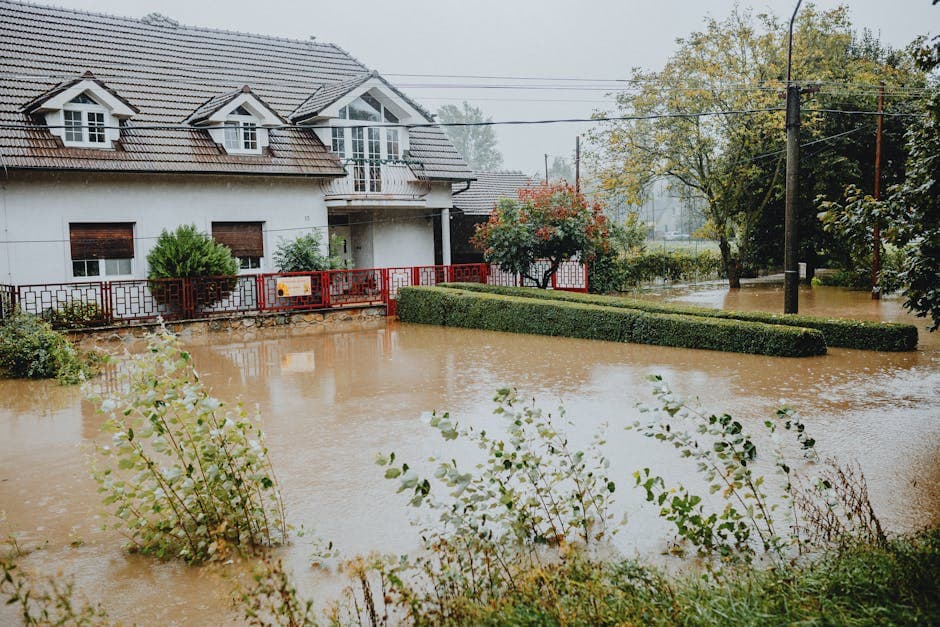
Garland's geography makes it one of the more flood-prone cities in the DFW metroplex. Rowlett Creek runs through the heart of the city, from the northern edge near the George Bush Turnpike all the way down to Lake Ray Hubbard. The creek's watershed covers a huge area, and when DFW gets one of its signature 3-inch-in-2-hour downpours, Rowlett Creek rises fast.
The areas most at risk are the neighborhoods along Rowlett Road, the sections near Spring Creek and Walnut Street, and the low-lying areas around Lake Ray Hubbard. During major storm events, water can rise over roads and into homes in these areas within 30 minutes. We have responded to calls in the Firewheel area where water entered slab-foundation homes through the expansion joints in the foundation itself , the water pressure from the saturated ground pushed water up through the slab.
It is worth noting that many Garland homeowners do not carry flood insurance because FEMA maps show their property outside the 100-year floodplain. But here is the reality: approximately 40 percent of FEMA flood claims come from properties outside high-risk flood zones. In Garland, the combination of expansive clay soil, inadequate storm drainage in older neighborhoods, and the city's position along Rowlett Creek means flash flooding can affect homes that have never flooded before.
Slab Leaks: Garland's Hidden Water Damage Threat
Slab leaks are the second most common water damage issue we see in Garland, and they are the most dangerous because they are invisible until the damage is extensive. A slab leak happens when a copper water pipe running under the concrete foundation develops a pinhole leak or a rupture. The water escapes under the slab, saturating the soil below and eventually finding its way up through expansion joints, control joints, or cracks in the concrete.
Garland's older neighborhoods , the sections built in the 1960s and 1970s , have copper plumbing that is reaching the end of its expected lifespan. Copper pipes buried in concrete and surrounded by Garland's expansive clay soil are subject to constant stress from soil movement. When the soil dries and shrinks, the pipes shift. When it gets wet and swells, they shift again. Over decades, this repeated movement creates stress fractures that eventually turn into leaks.
The early warning signs of a slab leak are subtle. A warm spot on the floor (the leak heats the concrete). A sudden increase in your water bill. The sound of running water when all fixtures are off. A musty smell near the baseboards. By the time you see visible water or a ceiling stain, the slab leak has usually been active for weeks or months.
What Water Damage Restoration Looks Like in Garland
When we arrive at a Garland home for a water damage call, the process is the same whether the source is an AC drain overflow, a slab leak, or a flash flood from Rowlett Creek. Here is what to expect:
Emergency response and water extraction. We dispatch a crew within 60 minutes of your call. The first step is stopping the source of water if it is still active , turning off the AC for a drain clog, shutting off the main water valve for a slab leak, or setting up exterior water diversion for floodwater. Then we extract standing water using truck-mounted pumps and portable extractors. The goal is to remove all standing water within the first few hours to prevent it from migrating further into the structure.
Structural drying and dehumidification. After extraction, we place air movers and commercial-grade dehumidifiers throughout the affected area. Garland's high humidity makes this step critical , if we do not dry the structure aggressively, moisture will wick up through sheetrock and into framing, creating ideal conditions for mold growth. We monitor moisture levels daily with moisture meters and thermal imaging cameras until the structure reaches dry standards.
Demolition and reconstruction. Any building materials that cannot be dried , saturated insulation, swollen sheetrock, damaged flooring , must be removed and replaced. This is the stage where the restoration cost varies most depending on how far the water traveled and how long it sat.
Mold prevention and remediation. If the water has been present for more than 48 hours, we treat the affected areas with antimicrobial solutions and may recommend a mold inspection. Garland's summer humidity means mold can colonize wet materials within 24-36 hours, so we do not take chances.
Tip for Garland homeowners: If you have an older slab-foundation home (pre-1990), consider getting a leak detection inspection every 2-3 years. A plumber can pressure-test your underground lines and use electronic leak detection equipment to find pinhole leaks before they become catastrophic failures. The cost of a detection inspection ($200-$400) is a fraction of the cost of a slab leak restoration ($2,000-$8,000).
Water Damage and Your Insurance in Garland
Insurance coverage for water damage depends entirely on the source of the water. Here is how it generally works:
Does my homeowners insurance cover AC drain overflow?
Yes, typically. A sudden AC drain clog that causes water damage is usually covered under standard homeowners insurance as a sudden accidental discharge. The policy will cover the cost of drying, demolition, and reconstruction, minus your deductible. It will not cover the cost of fixing the AC drain line itself , that is a maintenance issue.
Does insurance cover slab leaks?
Yes, for the damage. Most standard homeowners policies cover water damage from a slab leak as a sudden discharge. The coverage includes tearing out the slab to access the pipe, repairing the pipe, and restoring the flooring and foundation. However, some policies exclude long-term leaks (those that have been active for weeks or months) on the grounds that the homeowner should have noticed the signs. If you see early warning signs like a warm spot on the floor or a higher water bill, call a plumber immediately to create a documented timeline.
Does insurance cover flood damage from Rowlett Creek overflow?
No, standard homeowners insurance does not cover flooding from rising water. You need a separate flood insurance policy through the National Flood Insurance Program (NFIP) or a private flood carrier. This is the most common insurance surprise we see after major storms in Garland. Even homes outside the FEMA 100-year floodplain can experience flash flooding from overwhelmed storm drains or creek overflow.
Does insurance cover mold remediation after water damage?
This varies by policy. Some homeowners policies include limited mold coverage (typically $5,000-$10,000) when the mold is caused by a covered water damage event. Others exclude mold entirely. If you have a history of water damage claims, your policy may have a mold exclusion rider. Check your policy or ask your agent before a claim arises.
The Bottom Line for Garland Homeowners
Garland is a great city to live in, from the Firewheel Town Center shopping district to the trails along Rowlett Creek to the neighborhoods around Lake Ray Hubbard. But Garland's location on the Blackland Prairie and along a major creek watershed means water damage is not a question of if, but when. The most cost-effective steps are the simplest: clean your AC drain line before summer starts. Check your foundation for cracks during dry weather and seal them. Know whether your insurance covers flood damage. And save the number of a local Garland restoration company before you need it.
If your Garland home floods tonight, call GOAT Home Services at (469) 525-2254. We dispatch crews within 60 minutes for emergency water extraction and structural drying. We serve all of Garland, from the downtown historic area to the neighborhoods near Firewheel and Lake Ray Hubbard. Free assessment, no obligation, 24/7/365. We live and work in the same DFW community we serve, and we know Garland's homes, its flood patterns, and its insurance landscape from years of restoration work in this city.
For more information, see our guides on water damage restoration costs in DFW, Category 3 water damage and black water risks, what to do immediately after water damage, emergency roof tarping and board-up services, and mold remediation in Garland. If you are looking for water damage help in a neighboring city, see our guides for Allen, Plano, and Richardson.