
Quick Answer
Water damage in Richardson, TX: 40-year-old slab leaks and flash floods along Duck Creek cause most calls. How insurance covers it and what restoration looks like.
Richardson sits in the heart of the DFW metroplex, bordered by Dallas to the south, Plano to the north, and Garland to the east. It is a city of roughly 120,000 people with a housing stock that spans 1960s ranch homes in the Canyon Creek area, 1980s two-story colonials in the Richardson Heights neighborhoods, and newer infill construction along the Telecom Corridor. And like every city on the Blackland Prairie, Richardson has a water damage problem that comes with the geography.
We have responded to water damage calls in Richardson from every cause you can name: slab leaks in 1970s homes off Campbell Road, sewer backups in the older sections near Spring Valley, AC overflow from attic units in the Heights, and flash flooding in the low-lying areas along Duck Creek and Cottonwood Creek. The common thread is that water damage in Richardson almost always starts small and becomes expensive fast, because the soil and the housing stock make it worse.
Why Richardson Homes Are Especially Vulnerable to Water Damage
Richardson was largely built out between the 1960s and 1980s, which means the bulk of its housing stock is 40 to 60 years old. That puts a lot of Richardson homes right at the age where plumbing systems, foundation slabs, and roof coverings start to fail. Add the Blackland Prairie's expansive clay soil to the mix, and you have a city where water intrusion is less a matter of if and more a matter of when.
The expansive clay soil that underlies most of Richardson behaves like a sponge. During dry spells, the clay shrinks, pulling away from foundation slabs and creating gaps. When the rain comes, the clay swells and the gaps close, but not before water has already found its way under the slab and into the crawlspace. This shrink-swell cycle is the primary cause of slab leaks in older Richardson homes, and it is also why many homeowners in the area discover water damage not from a visible pipe burst, but from a crack in the foundation that opened during a drought and let water in during the next storm.
Here is how the different housing types in Richardson are affected by water damage:
| Housing Type | Built Era | Common Water Damage Causes | Typical Severity | What We See Most Often |
|---|---|---|---|---|
| Canyon Creek area homes | 1960s-1970s | Slab leaks, sewer line corrosion, roof wear | Moderate to severe | Foundation movement from clay soil cracking slabs, then water seeps up through slab cracks into flooring and lower walls |
| Richardson Heights & older neighborhoods | 1950s-1970s | Cast iron drain failures, roof leaks, foundation cracks | Moderate | Original cast iron drain lines corroding through, causing sewage backups in the main line under the slab |
| Telecom Corridor-area multifamily | 1980s-2000s | AC condensate overflow, supply line failures | Moderate to severe | Attic AC units in multi-story buildings leaking through ceilings, affecting multiple units in townhome complexes |
| Newer infill & custom builds | 2000s-2020s | Appliance supply line bursts, bathroom shower pan leaks | Mild to moderate | Ice maker lines and washing machine hoses failing at the connection point, flooding laundry rooms and adjacent rooms |
The #1 Cause of Water Damage in Richardson: Slab Leaks
Slab leaks are the single most common water damage call we get from Richardson homeowners. A slab leak happens when a hot water or cold water supply line running under the concrete foundation develops a pinhole leak or a full rupture. The water then seeps up through the slab, showing as a warm spot on the floor, a water stain on baseboards, or in advanced cases, standing water in rooms that are on-grade or below grade.
Why so many slab leaks in Richardson? Two reasons, and they work together. First, the expansive clay soil underneath the city causes the slab to shift. Every time the foundation moves, it puts stress on the copper or PEX pipes embedded in the concrete. Second, the original copper pipes in 1960s and 1970s Richardson homes are reaching the end of their useful life. Copper pipe corrosion accelerates when the pipes are in contact with the concrete slab, which is essentially a slightly alkaline environment. After 40 to 50 years, pinhole leaks become inevitable.
Warning
If you feel a warm spot on a concrete-slab floor, or if you hear the sound of running water when all fixtures are turned off, you may have a slab leak. Slab leaks do not fix themselves. They get worse, and the water damage spreads under the slab where you cannot see it. Call a plumber to locate the leak, then call a restoration company to extract any water that has already migrated into the living space. In Richardson, the average slab leak leads to $4,000 to $8,000 in water damage restoration plus the plumbing repair.
Flash Flooding in Richardson: A Recurring Problem
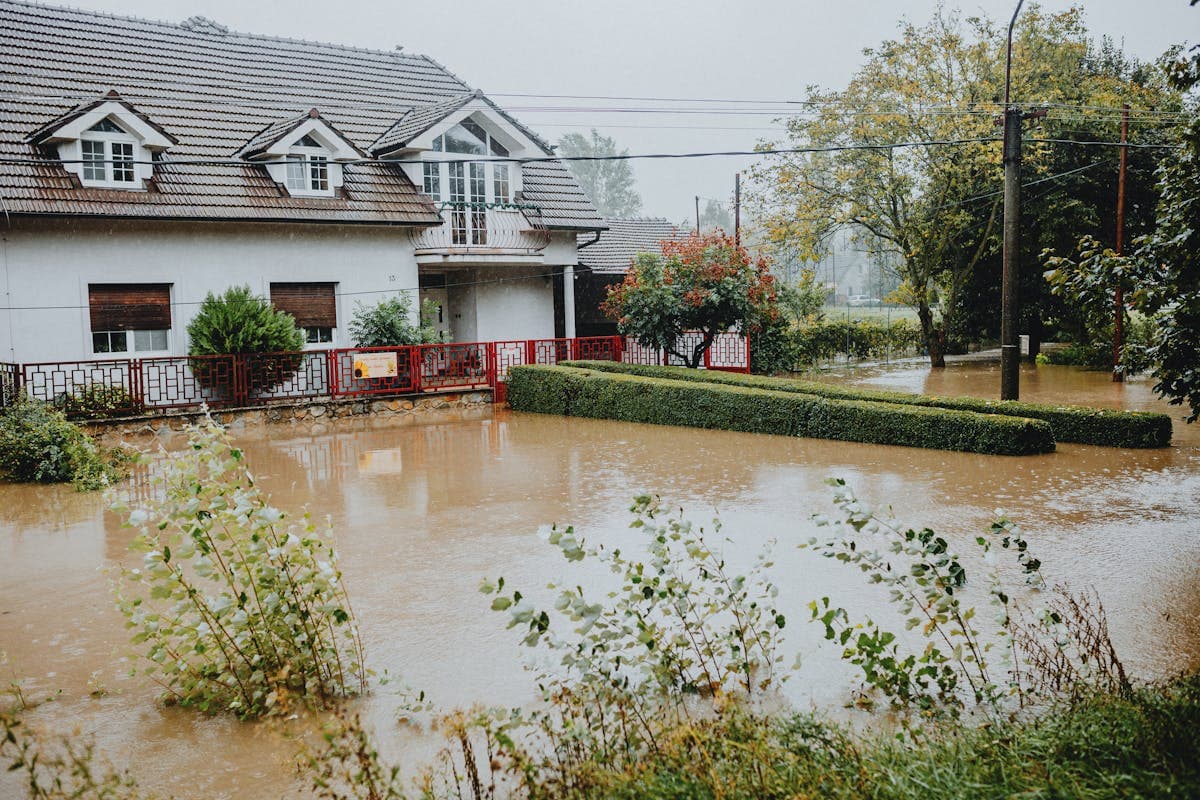
Richardson sits in the upper Trinity River basin, with Duck Creek running through the eastern part of the city and Cottonwood Creek crossing the southern section. These creeks are flood-prone during the intense rainfall events that North Texas experiences, especially in the spring and fall. A storm that drops 4 inches of rain in 2 hours will overwhelm the storm drainage system in many Richardson neighborhoods, sending water into streets, driveways, garages, and ground-floor rooms.
The areas around Spring Valley Road and Central Expressway see the worst of it, because the combination of dense development and aging storm drains means water has nowhere to go but into buildings. We have extracted standing water from finished basements in Richardson's hilly areas, ground-floor apartments off Yale Boulevard, and single-family homes in the flood-prone sections along Duck Creek. Floodwater in these cases is Category 3 black water: it carries bacteria, chemicals, and debris from the streets and yards it traveled through on its way into the home. That means everything it touches has to be removed.
For flood damage restoration, the clock starts ticking the moment the water recedes. The IICRC standard says that within 24 to 48 hours, untreated moisture will begin supporting mold growth. For Richardson homes hit by flash flooding, that means we start with extraction, then drying, then antimicrobial treatment, then reconstruction of any affected drywall and flooring.
AC Drain Line Clogs: The Summer Water Damage Culprit
Every summer starting in June, we get calls from Richardson homeowners whose AC condensate drain lines have clogged. The AC unit produces 5 to 20 gallons of water per day in the humid DFW summer. That water drains through a PVC line that runs from the attic unit to the outside of the house. When algae, mold, or sediment clogs that drain line, the water backs up and overflows the drain pan. From there, it soaks into ceiling drywall, runs down the walls, and damages flooring below.
In Richardson's two-story homes with second-floor attic AC units, a clogged drain line can cause damage to the ceiling of the first floor, the walls on both floors, and the flooring on the first floor before the homeowner even knows there is a problem. The first sign is often a water stain on the ceiling directly below the AC unit. For more detail on diagnosing that, read our guide on what a water stain on your ceiling means.
How often should Richardson homeowners flush their AC drain lines?
We recommend flushing your AC condensate drain line with a cup of white vinegar (not bleach) every 4 to 6 weeks during the cooling season, which in DFW runs from April through October. Pour the vinegar down the access tee near the air handler. Better yet, install a safety float switch on the secondary drain pan: if the pan fills up, the switch kills the AC before the water overflows. A float switch costs $20 at any hardware store and can save you $3,000 to $6,000 in water damage restoration.
What the Water Damage Restoration Process Looks Like in a Richardson Home
The restoration process in Richardson follows the same IICRC S500 standard as the rest of the industry, but the specifics depend on which type of damage we are dealing with. Here is the general sequence:
-
Emergency call and dispatch. You call, we respond within 60 minutes to the Richardson area. We assess the situation, identify the water source, and determine the water category (clean, gray, or black).
-
Water extraction. We extract standing water using truck-mounted or portable extraction units. The goal is to remove all visible water before structural drying begins. Every hour that standing water sits, the moisture penetrates deeper into porous materials.
-
Structural drying setup. We place air movers and dehumidifiers according to the drying science plan. The equipment configuration depends on the affected area size, the materials involved, and the extent of moisture migration. We monitor the drying progress daily.
-
Moisture monitoring and drying verification. We take moisture readings of affected materials daily. The drying phase typically takes 3 to 5 days for a standard water damage scenario, longer if Category 3 water or structural saturation is involved.
-
Antimicrobial treatment. After the structural drying is complete, we apply a broad-spectrum antimicrobial to all affected surfaces to prevent mold colonization. For Richardson homes with slab leaks where moisture wicked up through concrete, this step is especially important.
-
Reconstruction and repairs. We replace any drywall, flooring, baseboards, cabinetry, or other structural materials that were removed during the drying process. The scope of reconstruction depends on how much material was affected.
How long does water damage restoration take in a typical Richardson home?
A standard Category 1 water damage (clean water from a supply line failure) affecting one room of a Richardson home typically takes 3 to 5 days for drying and another 5 to 10 days for reconstruction, assuming no complications. A Category 3 flood damage event involving 6+ inches of standing water from a storm can take 2 to 4 weeks from start to finish. The biggest variable is how fast the drying equipment can pull moisture out of the materials. In the humid DFW summer, drying times can extend 1 to 2 days longer than in the dry winter months.
Does homeowners insurance cover water damage in Richardson?
Standard HO-3 homeowners policies in Texas cover sudden and accidental water damage from internal sources: burst pipes, appliance supply line failures, AC drain overflows, and slab leaks. They do NOT cover flood damage from external water (rain, creek overflow, groundwater seepage), gradual leaks that the homeowner should have known about, or damage from lack of maintenance. Flood insurance is a separate policy through the National Flood Insurance Program. We help every Richardson customer navigate their insurance claim and work directly with adjusters to make sure all covered damage is documented and included in the scope. For a detailed breakdown, read our complete guide to filing insurance claims for property damage.
How to Prevent Water Damage in a Richardson Home
Prevention is always cheaper than restoration. Here is what we recommend to Richardson homeowners based on what we see in the field:
- Install a water leak detection system. A simple Wi-Fi water sensor under the kitchen sink, behind the washing machine, and near the water heater costs $30 to $50 each and alerts your phone when moisture is detected. That early warning can save you thousands in water damage restoration.
- Replace washing machine hoses every 5 years. Rubber supply lines burst without warning. Replace them with braided stainless steel lines, which last significantly longer and resist bursting.
- Know where your main water shutoff valve is. Every adult in the house should know how to turn off the water supply to the whole house. In a burst pipe emergency, the first action is to shut off the water. The main shutoff in most Richardson homes is on the exterior wall facing the street, at the water meter, or in the garage.
- Maintain your AC condensate line. As discussed above, flush the line with vinegar every 4 to 6 weeks during the cooling season and install a float switch on the secondary drain pan.
- Check your water pressure. Richardson home water pressure should be between 40 and 60 PSI. Higher than 80 PSI puts excessive stress on pipe joints and connection points. A $15 water pressure gauge from the hardware store can tell you if you need a pressure regulator.
Our Recommendation
If your Richardson home was built before 1980, consider having a plumber perform a camera inspection of the main sewer line and a pressure test of the supply lines. The cast iron drain lines and copper supply lines in these homes are approaching or past their expected service life. A proactive inspection before a failure can save you the cost of emergency water damage restoration, which for a slab leak in Richardson typically runs $4,000 to $8,000 in mitigation plus several thousand more for reconstruction.
Frequently Asked Questions About Water Damage in Richardson, TX
Is Richardson, TX in a flood zone?
Some parts of Richardson are in FEMA-designated flood zones, particularly along Duck Creek, Cottonwood Creek, and their tributaries. However, most of Richardson is in Zone X (moderate to low flood risk). The more common water damage risk in Richardson is not riverine flooding but flash flooding from overwhelmed storm drains during intense rainfall events, combined with slab leaks and plumbing failures in the aging housing stock. Even homes outside the designated floodplain can experience water intrusion during a 4-inch-in-2-hours rainfall event.
How much does water damage restoration cost in Richardson?
Water damage restoration costs in Richardson vary based on the extent of damage, the water category, and the size of the affected area. A small Category 1 water damage (clean water, one room, no structural issues) typically costs $1,500 to $4,000. A moderate Category 2 or 3 event affecting multiple rooms runs $4,000 to $12,000. Major disasters like slab leaks or flash floods requiring extensive demolition and reconstruction can reach $15,000 to $40,000 or more. For a detailed breakdown by scenario, read our guide on water damage restoration costs in DFW.
What should I do if I discover a slab leak in my Richardson home?
First, turn off the water supply to the house at the main shutoff valve. Second, turn off the water heater to prevent it from running dry and potentially being damaged. Third, call a licensed plumber who specializes in slab leak detection and repair. The plumber will locate the leak, determine whether it is a hot water or cold water line, and recommend the repair method (repipe, pipe re-routing, or spot repair). Fourth, call a restoration company like GOAT Home Services to extract any water that has already entered the living space and begin structural drying. Delaying the restoration allows the water to wick up the walls and under cabinets, increasing the damage scope and cost.
The Bottom Line on Water Damage in Richardson, TX
Key Takeaways
Richardson's housing stock, clay soil, and location in the Trinity River basin make it one of the DFW suburbs most prone to water damage from slab leaks, flash flooding, and AC drain line failures. The city's 1960s through 1980s homes are at peak age for plumbing failures, and the expansive clay soil beneath them ensures that every drought and rain cycle puts stress on foundations and the pipes embedded in them. Water damage in a Richardson home can start small but the window to act is measured in hours, not days. Prompt extraction and drying are the difference between a $3,000 repair and a $30,000 renovation. Whether the source is a slab leak, a storm, or a clogged AC line, the same principles apply: stop the water, extract the standing water, dry the structure, treat for mold prevention, and then rebuild.
If you have water damage in your Richardson home, time is not on your side. We handle water extraction and restoration throughout Richardson and the entire DFW metroplex. Call (469) 525-2254 for a free assessment. We answer 24 hours a day, 7 days a week, including holidays.