
Quick Answer
Clean a flooded bathroom the right way: the 2-minute safety cut, the Category 1-2-3 check, the towel-and-wet-vac order, and the 48-hour mold line for DFW.
A flooded bathroom is the most common water emergency we get called about in DFW, and it is also the one homeowners clean in the wrong order. Mopping first and thinking later turns a two-hour dry-out into a subfloor replacement. Here is the sequence we teach, in the order the steps actually need to happen.
What to Gather and Check Before You Touch the Water
Assemble these before you touch the water. Most come from under your own sink or in the garage.
- Rubber gloves, eye protection, and boots or waterproof shoes
- Old towels, a sponge mop and bucket, and a wet/dry shop vacuum
- A bright flashlight and your phone camera
- A disinfectant for non-porous surfaces and heavy-duty trash bags
- Household bleach for sealed surfaces only, never for drywall or wood
Now check two things before you do anything else. First, the electricity: if water is near the vanity outlets, the light fixture, or any cord on the floor, kill the bathroom circuit at the breaker panel before you step in. Second, the water's category, because that single question decides whether this is your weekend project or ours.
| Water source | Category | Can you clean it yourself? |
|---|---|---|
| Overflow from a clean tub, sink, or a burst supply line | Category 1, clean water | Yes, if standing water came down within hours and nothing porous is soaked |
| Toilet bowl overflow with no visible waste, sink drain backup with soapy water | Category 2, greywater | Marginal: only hard surfaces; assume anything porous is contaminated |
| Sewage backup, toilet overflow with waste, water from the floor drain after rain | Category 3, black water | No: the EPA's own mold cleanup guidance draws the DIY line at contained areas, and Category 3 is never a contained-area job |
Our stance: if there is any chance the water came up from a drain or involved sewage, stop reading and call us or your emergency restoration line. Every year someone discovers a "small bathroom flood" was a sewer backup, and by the time they call, they have spread contamination through the whole house on their shoes. Our Category 3 black water guide shows how fast that one goes wrong.
How to Cut the Power and Stop the Water Source (Step 1)
Water near an energized outlet in a room where you are barefoot and kneeling is the one bathroom flood hazard that can kill you. Turn off the bathroom breaker (and the next-door circuit if the outlets share a run) before you mop. If the panel is in a wet spot or you cannot tell which breaker, shut the main.
Then find the source. A running toilet means the shut-off valve behind the tank. A supply line spray means the same valve or the main. An overflowing tub is usually a clog you will deal with later; the water is already stopped. If you cannot find the source, the main shutoff is your friend, and knowing it now is worth the walk to the garage. We wrote the full toilet-side version of this in our guide on how to stop a flooding toilet.
Our stance: two minutes on the breaker and the shutoff valve is not paranoia. The electric shock hazard in a flooded bathroom is small and final, and nothing else you do in this process matters if you skip it.
Why Photographs Come Before the First Towel (Step 2)
Ten minutes of photos before one towel hits the floor. Shoot the water line on the walls, the floor from each doorway, the source fixture, and anything damaged or ruined. Video the whole room walking in.
This matters for two reasons. Your insurer pays for what you can prove, and the mitigation duty in every Texas homeowner policy starts the moment you notice damage, which means your timestamped photos are the receipt that you acted. Second: the water line is a map. It tells you where the water sat longest, and that is exactly where we will check first if this becomes a professional job.
Our stance: photograph first even if you plan to handle everything yourself. If the room dries fine, you spent five minutes. If it does not, you just saved yourself a documentation fight in the worst month of your year.
How to Clear the Floor and Pull Standing Water (Step 3)
Everything soft leaves the room: towels, bath mats, the trash can, the weighing scale, the freely-standing vanity cabinet if it is sitting in water. Porous items that soaked up Category 2 or 3 water go in a bag, not a washer. Wipe the bottom of anything you cannot move, like the toilet base, and note how far moisture climbed the toilet pedestal.
Then extract in this order, which most articles get backwards:
- Towels and a sponge mop for the bulk. Press, do not swipe; swiping pushes water toward the perimeter you are trying to protect.
- The wet/dry vac for the edges. Every wall perimeter, around the toilet base, around the vanity toe-kick, and into the shower curb line. Household tile has a grout line, and grout is a seam water hides in, so the vacuum crevice tool along all four walls does more than the middle of the floor.
- The toe-kick and cabinet check. Feel inside the vanity cabinet floor. Water travels under cabinets on the subfloor and shows up in the room next door a week later.
Our stance: extraction is the whole ballgame, not drying. Every gallon the vacuum pulls out is a gallon your fans cannot deal with for three days, and the difference between a dry-out and a subfloor replacement is usually how carefully someone ran a crevice tool along the baseboards.
How Do You Dry a Bathroom and Find the Hidden Water? (Step 4)
Tiles make a flooded bathroom feel low-stakes because the surface looks dry in an hour. The problem is always below and behind the surface, so drying has two parts.
Air moves, and the room needs all three: box fans cross-venting toward an open window or into the hall, the bathroom exhaust fan running, and a dehumidifier if you own or can rent one. Run them continuously, not a few hours at night.
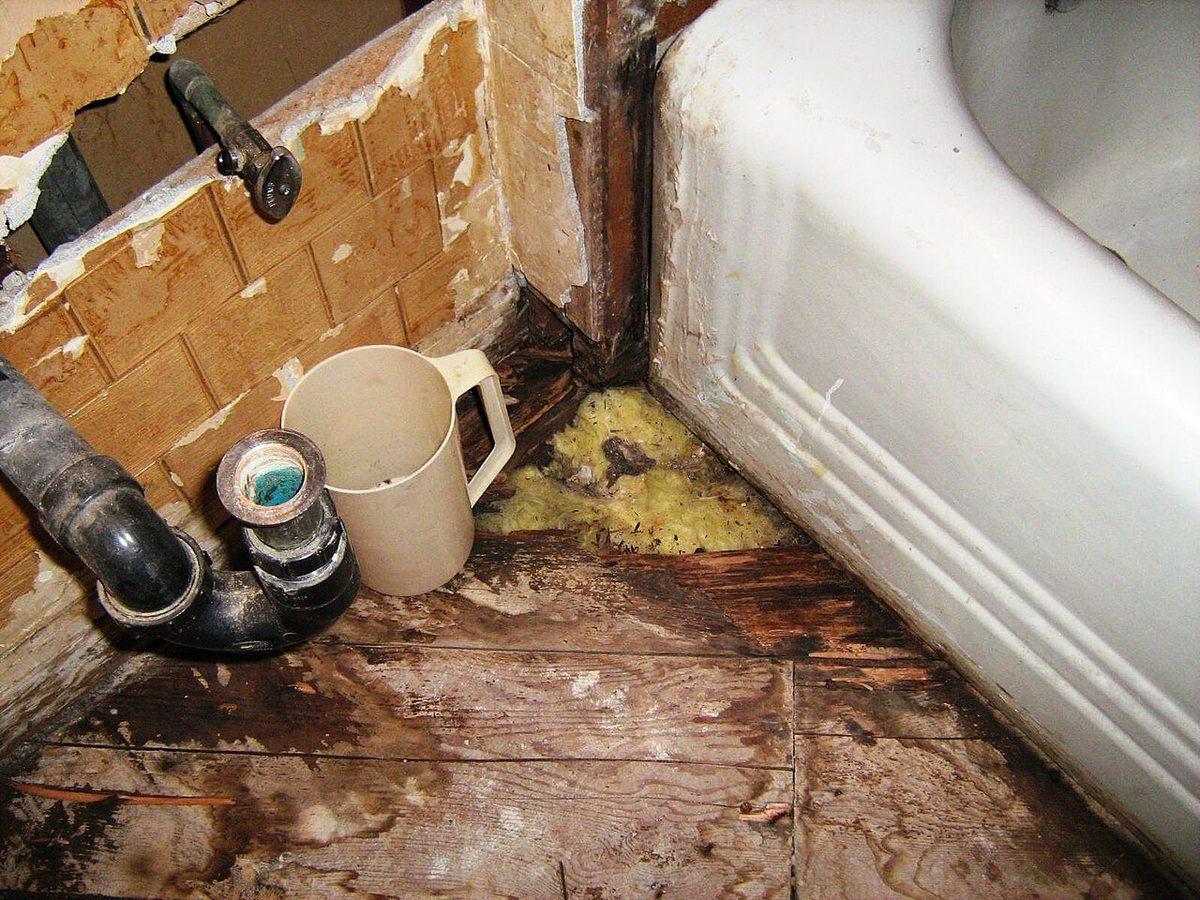
Now do the two checks that decide the job. Press the grout line at the base of the toilet and along the tub apron: soft or spongy underfoot near a wall means the subfloor is loaded. Then look at the ceiling of the room directly below the bathroom. A water stain on that ceiling means the water went through, and a bathroom that goes through the subfloor is no longer a bathroom problem.
Our stance: dry hard for a full 24 to 48 hours, because that is the window the EPA's moisture guidance treats as the point where mold response on wet material starts. In DFW's May-through-September humidity the window shrinks, and in winter you cannot crack a window open; that is why we say the drying step is equipment, not open doors.
How Should You Disinfect, and What Goes in the Trash? (Step 5)
Once the room is dry, clean in this order: solid surfaces first (tile, tub, sink, toilet exterior), then disinfect the floor, then deal with soft goods. Diluted bleach on tile, tub, and vanity exteriors is fine; bleach on wet drywall or wood subfloor is theater, since it cannot penetrate porous material anyway, and it is why our crews pull wet drywall instead of spraying it. The EPA mold cleanup guidance backs the same porous-versus-nonporous split we work by.
Throw away and do not try to save: any mattress or pillow that sat in floodwater, soaked particleboard vanity cabinets, upholstered items, and carpet pad (glued-down carpet over slab is sometimes salvageable by extraction; pad is not). Keep and launder: clothing and towels from Category 1 water, hot wash.
Our stance: the decision line is material, not sentiment. Porous plus flooded equals out, and a homeowner who bags the rug pad on day one spends half of what the person who "dried it first" spends on day twelve when the smell arrives.
Where Is the Line Between DIY and Calling a Pro?
Some flooded bathrooms are a DIY cleanup, and some are the start of a mold remediation, a subfloor replacement, or a claim. Call a restoration pro the same day if any of these are true:
- The water was Category 2 or 3, from any drain or anything involving sewage: our sewage damage cleanup guide walks the hour-by-hour sequence, and it is not a household one
- Water sat longer than a day before extraction started
- The floor feels soft near any wall, or the ceiling below shows a stain or a bulge
- The bathroom sits over a crawl space or the flood reached drywall (the bottom of the sheetrock got wet)
- You can smell it after 48 hours: musty is the sound the house makes when the drying failed, and our breakdown of that musty smell in DFW homes explains what is usually behind it
- More than one room is involved or the source is unknown, which points at supply-line or slab-level leaks
If the flood came from a toilet overflow you handled yourself, the same test applies after: photograph, dry, and check. The EPA's mold cleanup page puts the do-it-yourself ceiling at about a 10 square foot affected area, and a flooded bathroom floor is bigger than that more often than homeowners expect. Our 24/7 emergency response line is (469) 525-2254.
Our stance: the honest rule we give homeowners is one question at the 48-hour mark. Did the room get fully extracted and dried within two days of the flood? If yes, clean, disinfect, and watch the ceiling below through one humidity season. If no, you have a moisture problem wearing a clean bathroom's clothes, and calling is cheaper than waiting.
What Does Good Professional Drying Look Like?
If this becomes our job instead of yours, here is the standard it should be held to, whether we do it or anyone else does. A professional setup leaves measurable evidence: moisture readings on the subfloor, the wall base, and an unaffected reference room, logged daily. Equipment sized to the room's actual cubic footage and the incoming moisture load, not one fan on the tile. Air movers angled at the wet materials, a dehumidifier exhausting to the outside or sized for the house, and a documented dry standard from day one, which is the IICRC S500 water damage standard we work to as a certified firm.
If a company shows up, sets two fans, and leaves without a moisture meter, you have paid for airflow, not a dry-out. Ask to see the readings.
Our stance: the difference between restoration and a fan rental is the meter and the log. Hold any company to the numbers, ours included, because numbers end arguments with insurance adjusters and guesses start them.
Not Sure Whether You Need Help? Call Us Anyway
A flooded bathroom that is caught in the first hours, from a clean source, extracts and dries out in a weekend with a shop vac and discipline. The same bathroom ignored for two days becomes a demo project, a mold question, and a bigger claim. Almost every flooded bathroom we tear apart was once a flooded bathroom someone could have saved with towels, a vacuum, and a phone call.
If the flood came from a drain, if it sat more than a day, or if your ceiling below now has a stain, call us before the next shower. Our 24/7 emergency response line is (469) 525-2254, and you can read the drying process on our water extraction service page and our flood damage service page. One phone call gets you a moisture reading and a straight answer about whether you actually need us, and sometimes the straight answer is "keep your fans running and check back in two days." We would rather give that answer than sell a job you do not need.