
Quick Answer
Mold can start within 24–48 hours of water damage. DFW timeline: when it shows, how humidity speeds it up, and how fast to act. 60-min response.
You just had a toilet overflow on the second floor of your Plano home. The plumber fixed the supply line, the standing water is gone, and the carpet feels dry to the touch. You think you dodged a bullet. Three weeks later, you pull the baseboard away to check and find a patch of black growth covering the bottom edge of the drywall.
This happens in DFW homes every single week, and it is almost always preventable. Mold growth after water damage follows a predictable timeline, and that timeline is significantly shorter in North Texas than in most of the country because of our climate. This guide lays out the exact hours you have, what happens at each stage, and when the window for avoiding mold has already closed.
We have seen this play out across every type of DFW water loss: burst pipes in Dallas slab-foundation homes during freeze events, AC condensate overflows in Frisco attics, dishwasher failures in McKinney kitchens, and flash flood intrusion in Arlington lower levels. If you know the timeline, you can beat it.

The Mold Growth Timeline: Hour by Hour
The IICRC S500 standard for water damage restoration identifies the 24-to-48-hour mark as the critical mold growth threshold. Here is what actually happens at each stage, based on industry research and what we see on the job.
Stage 1: Hours 0 to 24 — Spore Activation
Mold spores are present in every home, every DFW home included. They float in the air, settle on surfaces, and wait for the right conditions to germinate. The three things they need to germinate are moisture, a food source (any organic material like drywall paper, wood, dust, or carpet fibers), and temperatures between 60 and 80 degrees Fahrenheit.
During the first 24 hours after a water event in a DFW home, two things happen:
- Spores land on wet surfaces and absorb moisture. As they swell, metabolic activity begins. The spore goes from dormant to active.
- The moisture front spreads. Water wicks up drywall, travels under baseboards, and soaks into subflooring and wood framing. The wet surface area grows, giving spores more territory to colonize.
At this stage, you cannot see mold. The materials might still feel damp or already dry to the touch on the surface, but moisture is trapped in the structure. In DFW, where summer humidity averages 70 to 85 percent, surface-dry materials can still have moisture content above 20 percent inside, which is enough to sustain spore activation.
The key decision point arrives at hour 12: if you have not started professional drying by this point, you are already in a race against the clock. This is why water extraction and structural drying within the first 12 hours is the single most effective mold prevention strategy.
Stage 2: Hours 24 to 48 — Germination and Hyphal Growth
This is the critical window. At roughly 24 hours, activated spores begin germinating. The spore produces a germ tube, a tiny thread-like structure that grows outward and begins searching for nutrients. This is the first visible step of colonization, though you still cannot see it with the naked eye.
Between 24 and 48 hours, the germ tubes develop into hyphae, which are the branching filaments that make up the body of a mold colony. The hyphae secrete enzymes that break down the organic material they are growing on (drywall paper, wood cellulose, carpet fibers) and absorb the digested nutrients. This is when mold starts actively consuming your building materials.
At the 48-hour mark, the colony is established. In a DFW home with standard indoor conditions (72 to 78 degrees, 60-plus percent humidity), the mold is now growing and spreading within the material, even though it may not be visible on the surface. If you cut open the drywall at this stage, you would find dark speckling on the back side of the paper face and on the wood framing behind it.
The 48-hour mark is the hard deadline. If wet materials have not been dried by this point, mold colonization is underway and remediation will be required. Drying alone will no longer prevent mold growth. The colony is established and will continue growing as long as the moisture source persists.
Stage 3: Days 3 to 7 — Visible Colonization
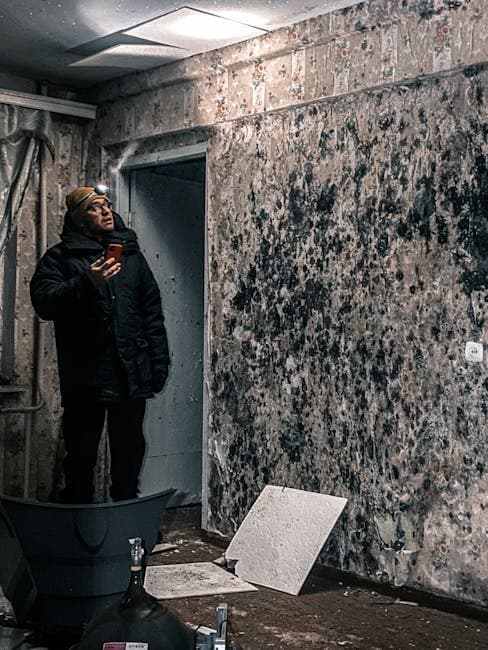
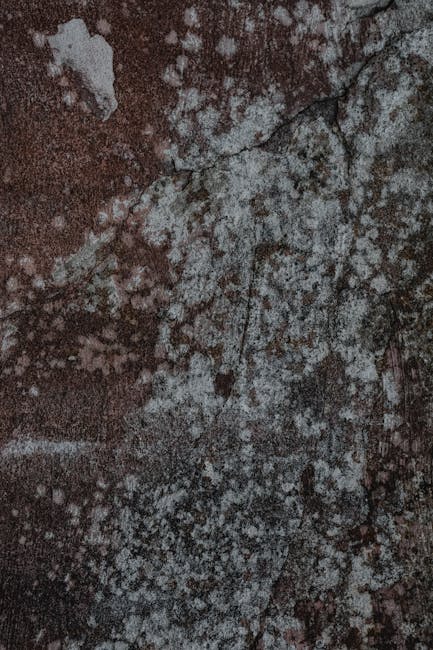
Between day three and day seven, the mold colony becomes large enough to see. This is when most homeowners discover they have a problem. The mold appears as:
- Small dark spots or patches on drywall, usually starting at the bottom edge where water wicks up from the baseboard
- A dark ring around the perimeter of a ceiling water stain where moisture wicked outward
- White or gray fuzz on wood surfaces in the attic, crawl space, or behind appliances
- Black or green patches on carpet edges where moisture wicked up from the pad
- Dark discoloration on the back side of baseboards when you pull them away from the wall
At this stage, the colony is also producing the musty, earthy odor that most people associate with mold. The smell comes from microbial volatile organic compounds (mVOCs) that the mold releases as it metabolizes building materials. If you smell it, the colony has been growing for at least three days and almost certainly longer.
By day seven, the affected materials are compromised. Drywall that has supported mold growth for a week has lost structural integrity. The paper face delaminates from the gypsum core. Wood framing has absorbed enough moisture to support deep fungal growth that sanding alone will not remove. At this stage, professional mold remediation is the only safe option.
Stage 4: Days 7 to 14 — Spore Release and Spread
Between one and two weeks, the mold colony matures and begins producing its own spores. These spores are the reproductive mechanism of the colony, and they are released into the air. Once airborne, they travel through your home's air currents, HVAC system, and open doorways to settle on new surfaces and start new colonies.
This is when a localized mold problem becomes a whole-home problem. The original colony in the wall cavity behind a baseboard in one room releases spores that travel through the HVAC ductwork and land on surfaces throughout the house. If those surfaces have any moisture at all, which is typical in DFW's humid summer air, the spores germinate and new colonies form.
By day 10 to 14, the original colony is producing enough spores to measurably degrade indoor air quality. This is when health symptoms typically appear or worsen: respiratory irritation, sinus congestion, headaches, and fatigue. The people most affected are usually the ones who spend the most time in the home, often children, elderly family members, and anyone with asthma or allergies.
At this stage, remediation becomes significantly more complex and expensive. The job is no longer about treating the original water-damaged area. It involves HEPA vacuuming the entire home, cleaning all surfaces, treating the HVAC system, and sealing off the affected zone from the rest of the living area. The cost typically doubles or triples compared to remediation caught in stage 2 or 3.
Stage 5: Weeks 2 and Beyond — Structural Damage and Mycotoxins
Beyond the two-week mark, the mold colony has been actively consuming building materials for long enough to cause measurable structural damage. Wood framing loses strength as cellulose is broken down. Drywall crumbles. Subflooring delaminates. In severe cases, the affected wall or floor assembly may need to be fully gutted and rebuilt rather than cleaned and dried.
Some species of mold, particularly Stachybotrys chartarum (commonly called black mold), produce mycotoxins under certain conditions. Mycotoxins are chemical compounds that can cause more severe health effects than the spores themselves. Black mold requires prolonged moisture, which is why it is most commonly found in DFW homes with chronic leaks or flooding that went unaddressed for weeks or months.
The bottom line on timing: mold growth is not a question of if, but when. Given the right moisture conditions, which exist after any water damage event in a DFW home, mold will grow. The only question is whether you dry the materials before the spores can germinate, which is within 24 to 48 hours.
Why DFW Speeds Up the Mold Growth Clock
National mold growth timelines from general-interest home improvement sites assume average indoor conditions. They do not account for what makes North Texas different. Here is why the clock runs faster in DFW homes:
Summer Humidity Keeps Materials Damp Longer
From May through September, DFW outdoor humidity averages 70 to 85 percent. When wet materials are surrounded by air that is already saturated with moisture, the drying process slows significantly. A drywall patch that would dry in 12 hours in a dry climate takes 36 to 48 hours in DFW summer humidity. That extra time pushes the material past the 24-to-48-hour mold germination window. Even if the visible surface feels dry, the moisture content inside the material stays elevated long enough for mold to start growing.
Expansive Clay Soil Traps Foundation Moisture
DFW sits on Blackland Prairie expansive clay. This soil absorbs water slowly and releases it even slower. When heavy rain saturates the clay, it stays wet for days, pressing moisture against slab foundations. In slab-on-grade homes, which are the majority of DFW construction since 1960, that moisture seeps through hairline foundation cracks and into the subfloor and lower wall assemblies. The moisture source persists long after the visible water is gone, keeping the building materials damp enough for mold to colonize over weeks, not days.
Attic Air Handlers Create Hidden Wet Zones
In many DFW suburbs like Plano, Frisco, McKinney, and Carrollton, the HVAC air handler lives in the attic. When the AC condensate drain clogs, which is the leading summer water damage cause in DFW, water overflows into the attic insulation and ceiling drywall. The moisture is trapped above the ceiling, often for days, before the homeowner notices a stain. By the time you see the stain, mold has been growing in the attic and ceiling cavity for 48 to 72 hours.
Slab-on-Grade and Pier-and-Beam Differences
Post-1960 DFW homes on slab foundations have a specific vulnerability. Water on a slab floor absorbs into the concrete, which holds moisture for two to three weeks even under professional drying equipment. The wood framing along the slab edge wicks that moisture up like a sponge. In pier-and-beam homes, common in older Dallas neighborhoods like Lakewood and Oak Cliff, the crawlspace moisture creates ideal conditions for mold growth under the house that spreads upward into the living space.
The 6 Factors That Control Mold Growth Speed
Not every water loss produces mold at the same rate. These six factors determine whether mold appears in 24 hours or takes a week:
- Temperature: Mold grows fastest between 60 and 80 degrees Fahrenheit, which is the indoor temperature range in virtually every DFW home during spring and fall. Summer indoor temperatures of 72 to 78 degrees are in the optimal growth zone.
- Moisture level: Materials need a moisture content above 16 to 20 percent to support mold growth. Drywall at 20 percent moisture content supports rapid colonization. A properly dried material below 15 percent does not. The goal of professional drying is to get every affected material below that 15 percent threshold.
- Material type: Porous organic materials like drywall paper, wood, cardboard, paper-faced insulation, and cotton fabrics support mold growth fastest. Non-porous materials like glass, metal, and hard plastics do not support mold growth unless they have a layer of dust or organic film on the surface.
- Airflow: Stagnant air allows moisture to concentrate around wet materials. Moving air accelerates evaporation and slows mold growth. This is why restoration professionals place air movers strategically, not just fans pointed at the wet spot.
- Spore presence: All DFW homes have mold spores present in the indoor air. But homes in older neighborhoods with previous mold issues, homes near construction sites, or homes with open windows during high-spore seasons have higher spore loads and faster colonization.
- Light exposure: Ultraviolet light inhibits mold growth. Mold grows fastest in dark, enclosed spaces like wall cavities, crawl spaces, attics, and closets. Visible mold on an open wall surface is a late-stage sign that the colony has been growing for days.
DFW Monthly Mold Risk Calendar
Mold risk is not constant throughout the year in North Texas. Here is when the risk is highest and what to watch for each season:
May through September: High Risk
This is the DFW mold danger zone. Average humidity 70 to 85 percent. Indoor AC runs 14 to 18 hours a day, producing condensate that can clog and overflow. Thunderstorms drop 2 to 4 inches of rain in a single event. Any water intrusion during these months carries an elevated mold risk because the ambient air cannot absorb the moisture fast enough to dry wet materials. If you have a water event between May and September, you have about half the normal window to get materials dry before mold colonizes.
October through April: Moderate Risk
Lower humidity and cooler temperatures slow the mold growth clock. A burst pipe or appliance leak in January has a 36-to-60-hour window before mold begins colonizing, compared to 24 to 36 hours in summer. But freeze events add a specific risk: burst pipes from freezing temperatures. Winter Storm Uri in February 2021 caused water damage in thousands of DFW homes, and the resulting mold problems lasted for months because the water had time to soak deep into structures before homeowners could get help.
How to Tell If Mold Is Growing in Hidden Areas
You cannot always see mold before it becomes a problem. Here are the signs that mold is growing behind walls, under floors, or above ceilings in your DFW home:
- A musty smell in a specific room that was not there before the water event. The smell is usually strongest near baseboards, in closets, or around plumbing fixtures. If a room smells like wet cardboard or damp earth, mold is almost certainly colonizing inside the wall or floor assembly.
- Health symptoms that correlate with time spent in the home. If you or your family members developed coughing, sneezing, headaches, or sinus congestion after the water event and the symptoms improve when you leave the house, the mold colony has reached spore-producing stage and is affecting your indoor air quality.
- New stains or discoloration on drywall that were not there immediately after the water event. A small yellow or brown patch that appeared a week later is almost always a mold colony growing behind the paint.
- Warping or buckling in baseboards, flooring, or drywall that continues weeks after the water event. This means moisture is still present in the materials, which means mold is likely growing.
- A moisture meter reading above 15 percent on wood or drywall more than 72 hours after the water event is a strong indicator that mold colonization is underway. If you do not have a moisture meter, a restoration professional can take readings during an inspection.
If you notice any of these signs after a water damage event in your DFW home, schedule a professional mold inspection before the colony spreads further. We use thermal imaging cameras and pin-type moisture meters to locate hidden mold growth that would not be visible during a standard walkthrough.
What to Do Today: Action Steps by Timeline
Your response to water damage should be determined by how much time has passed since the water intrusion occurred. Here is what to do based on where you are in the mold growth timeline:
Within 24 Hours (Spore Activation Stage)
You still have time to prevent mold. Call a water damage restoration company immediately. A professional crew will extract standing water, place industrial air movers and dehumidifiers, and monitor moisture levels until all materials fall below the 15 percent threshold. If you catch it within 24 hours and dry it properly, you can almost always avoid mold remediation entirely. The cost of drying is a fraction of the cost of mold remediation and reconstruction.
24 to 48 Hours (Germination Stage)
You are in a race. Professional drying equipment is essential; consumer fans and a shop vac will not dry structural materials fast enough to stop germination. Call a restoration company now. The crew will need to pull baseboards, drill drying holes in the wall cavities, and use injectidry systems to force dry air into the wall assemblies. If the drying is aggressive enough and starts before the full 48-hour mark, you may still avoid mold remediation, but it is not guaranteed. Areas where water wicked up drywall more than 6 inches from the floor will almost certainly need to be cut out and replaced regardless of drying speed.
48 to 72 Hours (Active Colonization)
Mold colonization is underway. You need both water extraction and mold remediation. The wet materials that cannot be dried quickly enough need to be removed. Drywall, insulation, carpet, and padding in the affected zone should be cut out and disposed of. Wood framing can be sanded and treated with antimicrobial solution if the contamination is surface-level. Do not assume that drying alone will solve the problem at this stage. It will not. The mold is already established in the material, and drying will only stop it from getting worse, not reverse the growth that has already occurred.
Beyond 72 Hours (Visible Colonization)
You have a full mold problem that requires professional remediation. All affected porous materials need to be removed. The area needs to be contained with negative air pressure to prevent spore spread. HEPA vacuuming and antimicrobial treatment are required. If the mold has spread to the HVAC system, the ductwork needs to be cleaned or replaced. This is the most expensive and disruptive scenario, and it could have been prevented with a faster response. Call us anyway. We have handled this situation many times and can walk you through exactly what needs to happen.
Frequently Asked Questions
Does mold always grow after water damage?
No, but it will grow if wet materials stay above 16 to 20 percent moisture content for more than 24 to 48 hours. If you dry the materials within that window, mold colonization does not occur. The IICRC S500 standard is clear on this: rapid drying is the primary mold prevention strategy. The longer materials stay wet, the higher the probability of mold growth.
Can I just paint over mold on drywall?
No. Painting over active mold growth does not kill the mold. The colony continues growing behind the paint, and within weeks or months, the paint will bubble, crack, and peel as the mold pushes through. The only safe approach is to remove the affected porous material or treat it with professional antimicrobial methods. Kilz and other stain-blocking primers are designed for non-organic stains, not active mold colonization.
How long does mold take to grow to the point of health effects?
Health effects from mold exposure vary widely by individual. Some people react within days of colonization. Others may not notice symptoms for weeks. The two factors that determine health impact are the size of the colony (which determines spore concentration in the air) and individual sensitivity. People with asthma, allergies, respiratory conditions, or compromised immune systems are most vulnerable. Children and elderly family members are also at higher risk. If anyone in your home develops symptoms after a water event, do not wait for visible mold to appear. Have the indoor air quality tested by a professional.
Does bleach kill mold?
Bleach kills surface mold on non-porous surfaces like tile and glass, but it is ineffective on porous materials like drywall, wood, and fabric. Bleach is 90 percent water. When you apply it to drywall, the water soaks into the material and the bleach evaporates on the surface. The water carries the mold roots deeper into the material, making the problem worse. For porous materials, physical removal of the affected material is the only reliable solution.
How do I know if my DFW home has hidden mold?
The most reliable indicators are a persistent musty smell, moisture meter readings above 15 percent on building materials, and health symptoms that improve when you leave the house. A professional mold inspection includes moisture mapping with thermal imaging, air quality sampling, and surface testing. If you suspect hidden mold after a past water event, schedule an inspection rather than waiting for visible signs. By the time you see mold on a wall surface, the colony has been growing for at least three days and likely longer.
The Bottom Line
Mold growth after water damage follows a predictable timeline. In a DFW home, that timeline is compressed by our high humidity, expansive clay soil, and common construction patterns. You have 24 hours to begin drying, 48 hours to complete it, and anything beyond that means mold colonization is underway. The difference between a $1,500 drying job and a $10,000 mold remediation project is those first 48 hours.
If you have had any water intrusion in your home, whether from a pipe burst, appliance failure, storm, or AC overflow, do not assume it is handled just because the standing water is gone. The moisture trapped in your walls, under your floors, and in your attic is the real threat. A moisture meter reading will tell you in seconds whether you are safe or whether the clock is ticking.
Professional water extraction and structural drying is the single most effective mold prevention strategy available. It is faster, cheaper, and far less disruptive than mold remediation after the colony is established. If you are within 48 hours of a water event in your DFW home, call us now. If you are past 48 hours and suspect mold is growing, call us anyway. We can assess where you are on the timeline and tell you exactly what needs to happen next.
GOAT Home Services responds 24/7 throughout Dallas-Fort Worth. We serve Dallas, Plano, Frisco, McKinney, Arlington, Fort Worth, Irving, Garland, Richardson, Carrollton, Allen, Flower Mound, Grapevine, Southlake, and every DFW suburb. Call (469) 525-2254 for a free assessment. We will tell you where you are on the timeline and what it will take to protect your home.