

Quick Answer
McKinney TX water damage guide: slab leaks in Craig Ranch, Blackland clay soil under slabs, AC drain clogs, and Wilson Creek floods. Call (469) 525-2254.
McKinney is our busiest stretch of US-75 north of Dallas. We pull wet carpet in Craig Ranch on Saturdays and chase ceiling stains near the courthouse square on Sundays. Here is what we tell every McKinney homeowner: what the local clay does to your slab, and when you can fix it yourself.
Why McKinney Homes Face Unique Water Damage Challenges
McKinney went from 54,369 residents in 2000 to 195,308 in the 2020 Census, and the Census Bureau ranked it the nation's fourth fastest-growing large city between 2010 and 2019 (Wikipedia). That growth curve is the whole story behind your water damage risk. Almost every home outside the historic downtown was built after 1995, which means the plumbing, water heaters, supply hoses, and AC systems in Craig Ranch, Stonebridge, and west McKinney are all aging at the same time.
The other half of the story is under your foundation. McKinney sits on Blackland Prairie clay, the highly expansive vertisol that swells when it gets wet and shrinks hard during North Texas droughts. That shrink-swell cycle moves slabs, and moving slabs stress the water and drain lines run through them. New construction did not escape this. It doubled down on it, because so much of the housing stock was poured directly into active clay.
Here is how the two dominant housing eras fail differently:
| Factor | Historic core and pre-2000 homes | Post-2000 master-planned builds |
|---|---|---|
| Typical eras | Around the Downtown Square, pre-1995 infill | Craig Ranch, Stonebridge, west McKinney, 1995 to today |
| Most common failure | Aging supply lines, roof leaks into wall cavities | Slab leaks from clay movement, AC condensate clogs, water heaters at year 10 |
| Where water hides | Pier-and-beam crawl space, plaster and lath | Under flooring over slab, inside exterior wall cavities |
| What surprises owners | Damage spreads sideways through old framing | A pinhole slab leak saturates the house for weeks before anyone sees it |
Our position after years of working both ends of that table: the biggest water threat in McKinney is not the storm, it is decade-old equipment in a slab home on moving clay. Sandbags are optional. Knowing where your main shut-off is, is not.
The McKinney Infrastructure Factor
Three infrastructure realities shape water losses in this city more than any other.
Slab plumbing on active clay. Copper and PEX lines under a McKinney slab bend with the soil for years before one finally fails. Slab leaks are slow, so the water has a head start on your floors and baseboards. Warm spots on the floor, an unexplained jump in the water bill, or the sound of running water with every fixture off are the classic tells. By the time one of those shows up, the moisture map is usually far bigger than the stain.
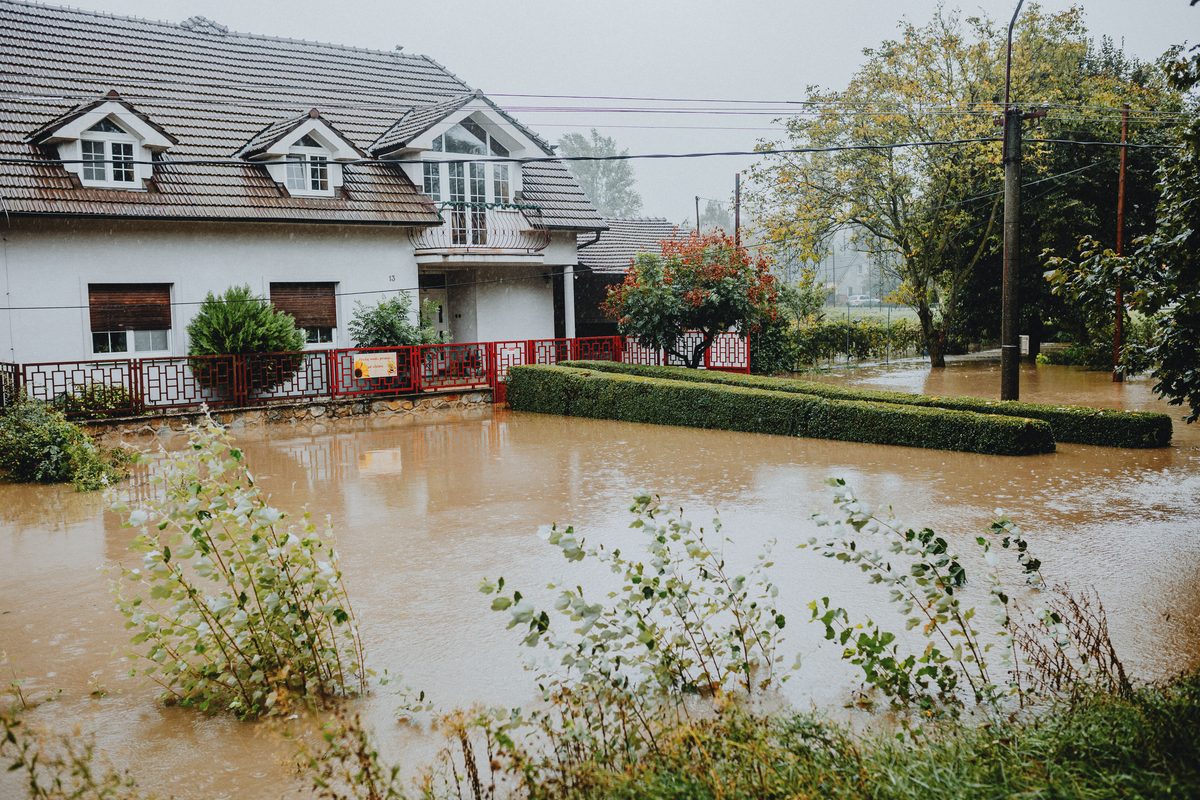
Wilson Creek and the floodplain program. Wilson Creek runs straight through town under US-75, and the City of McKinney's Engineering Department runs an active floodplain management program that maintains floodplain records, enforces development restrictions in mapped floodplain, and works with FEMA to keep flood insurance maps current. We think every McKinney buyer should read that page before closing, and every seller should read it before listing. Creek-adjacent lots in this town can look dry for a decade and then prove the map right in one trained spring thunderstorm.
The same growth pattern produced the same water profiles across Collin County. The failure list for clay-soil builds of the same era reads almost identically in Frisco one county seat south, and our storm flooding guide for Frisco documents what those losses look like when a summer storm trains over the corridor.
A licensing system worth understanding. Texas is one of the few states that licenses restoration-adjacent work at the state level. TDLR requires mold assessment and remediation companies to hold a state license, and the state's own company license application page lists the $850 license fee and the required $1 million per occurrence commercial general liability coverage. We will say this to any competitor's face: hire a company that hands you its TDLR number and certificate of insurance before it touches your house, and walk away from anyone who won't. GOAT is a TDLR-licensed, IICRC-certified firm, and we hand over both documents before we set a single air mover.
Water Damage Warning Signs in McKinney-Era Homes
Most McKinney losses announce themselves early. The problem is that the announcement usually looks like nothing. These are the signs that matter, sorted by the kind of home they hit, because a 2005 Craig Ranch build and a 1920s home near the square warn you differently.
Signs in post-2000 slab homes (Craig Ranch, Stonebridge, west McKinney)
- Warm spots on tile or hardwood with the heat off. That is a slab leak reading through the floor.
- A water bill that climbs while usage stays flat. Pinhole slab leaks meter quietly for weeks.
- Baseboards that feel damp or paint bubbling at the floor line on an exterior wall.
- One room that feels humid while the rest of the house is dry, usually over the wettest part of the slab.
- The water meter dial turning with every fixture off. This is the simplest self-test in the book, and it takes sixty seconds.
We tell McKinney clients to run the meter test once a season. It costs nothing and it catches slab leaks while they are still one-room jobs.
Signs in any home: appliances and AC
- Rust collar or a damp ring under the water heater. Read our guide to what it means when your water heater leaks from the top before you mop it up and forget it.
- A secondary drain pan under the air handler that is full or a condensate line that drips at the wall penetration. In Collin County attics this is the failure that surprises people most: a clogged AC drain line dumps gallons above the drywall ceiling, and you find it as a brown stain, not as water.
- Washing machine and dishwasher hoses that are stiff, kinked, or show crust at the crimp. Rubber supply hoses are a five-to-seven-year part. Most McKinney homes are running the original hoses.
Signs near Wilson Creek and mapped floodplain
- Repeated water in the garage or along the slab edge after hard rain, even when the roof is fine.
- Downspouts that discharge right at the foundation instead of several feet out. Newer trims often grade beautifully and discharge badly.
- Street or creek water at the property line after a storm. If it reached the slab edge once, plan the next call around that memory.
How GOAT Home Services Covers McKinney
We serve all of McKinney, including the historic Downtown Square area, Craig Ranch, Stonebridge, and west McKinney, with 24/7 emergency dispatch and a 60-minute target arrival. Water extraction is where every one of these jobs starts, and our crews work the water extraction process to the IICRC S500 standard: extract standing water, set structural drying, then verify with moisture readings instead of vibes. If walls can dry in place, we dry them in place. Demolition is a last resort, not a shortcut.
The paperwork side matters just as much in this market. McKinney rebuild costs are high, adjusters are busy, and carriers pay for documentation. We moisture-map on hour one, photograph as we find, log drying daily, and give you an itemized scope your adjuster can actually price. Our duty, and yours under the policy's mitigation clause, is to stop the damage from growing, and our emergency response page spells out what we handle the first night so your claim does not hinge on a voicemail.
Every technician on a McKinney job holds an IICRC WRT certification, and our project managers include a licensed Texas Mold Remediation Contractor, because in this climate a water loss that dries slowly becomes a mold conversation. We bill carriers directly and walk the claim with you through the insurance process, including supplements when we open a wall and find more than the estimate saw.
Prevention Specific to McKinney
Generic prevention advice ignores the two things that make this town different: a housing stock built almost entirely after 1995 that is aging in lockstep, and clay soil that never stops moving. Here is the McKinney version.
This year, while the housing cohort is in the window. Water heaters are a ten-to-twelve-year product, washing machine supply hoses are a five-to-seven-year part, and most of Craig Ranch and Stonebridge was built with both installed. Walk the house and date-stamp your water heater, tag your hoses, and replace anything original. This single habit prevents more McKinney losses than any storm prep.
Every season, around the slab. Check that downspouts carry water several feet from the foundation. Keep the soil graded away, not toward, the slab edge. Run the meter test we described above. In a drought, water the foundation lightly during long dry spells so the clay does not shrink out from under your lines.
Before storm season. DFW takes 2 or more inches of rain in a single day three to five times a year, and drainage in newer trims is still catching up to the rooftops pouring into them. Our McKinney flood-season guide covers what we see when Wilson Creek and the US-75 corridor take a trained storm. Read it in March, not in July.
If you are weighing a small cleanup yourself, our DIY versus professional comparison is the honest line between the two, written by the people you would be calling.
When to Call Us (And When a Shop Vac Is Enough)
Here is the line we draw for McKinney homeowners, and we will defend it at every kitchen table in Collin County.
Call us the same hour when: the water came from a slab leak or came up from the floor (that is Category 2 or 3, not a mop job); any room has been wet longer than a day; drywall, insulation, or flooring over slab is wet; the meter test spins; or there is any mold smell after a past leak. Water over 24 to 48 hours in this climate is a mold job waiting to be billed, and drying equipment from a big-box store moves air without pulling moisture out of the structure.
You can handle it yourself when: a clean supply-water spill is contained to a small floor area, you found it within a couple of hours, you pulled the carpet pad, and you can get the room bone dry with good airflow the same day. If you cannot verify dryness with a meter, you are guessing, and drywall does not negotiate.
When the line is closer than you like, call us at (469) 525-2254. We dispatch 24/7 across McKinney and the rest of the metro, and a thirty-minute conversation at discovery regularly turns into the smallest scope in town. A wet house is an information problem first and a construction problem second. We would rather set two air movers than eleven.