

Quick Answer
Frisco TX storm guide. Flash flooding from Panther Creek, clay soil cracks, 90 min restoration. 40% of FEMA flood claims come from outside high-risk zones.
Frisco has been one of the fastest-growing cities in the United States for over a decade. What many new residents do not realize until their first summer here is that North Texas weather does not care about growth projections. When a July supercell rolls over Collin County, the same clay soil that made Frisco affordable to build on becomes the thing that sends water into your foundation.
We are GOAT Home Services, a Frisco-based restoration company. We have pulled water out of brand-new $800,000 homes in Panther Creek and 2000s-era houses in Plantation Resort during the same thunderstorm. This guide covers what Frisco homeowners actually need to know about summer storms, flash flooding, and what happens after the water comes in.
Why Frisco Homes Face Unique Storm Risks
Frisco sits on the Blackland Prairie, where the soil is expansive clay that shrinks during dry spells and swells during rain. This shrink-swell cycle is the primary mechanism for foundation cracks in Frisco homes. When a dry July week is followed by a 3-inch thunderstorm, those cracks become direct water pathways into crawl spaces and slab foundations.
The city's rapid development has also created drainage challenges. Newer neighborhoods in Frisco were built with modern stormwater management, but older areas near the Panther Creek drainage basin and along Preston Road can flood within 30 minutes of heavy rain. The Frisco storm drain system, while well-maintained, was not designed for the 2-inches-in-60-minutes deluges that summer thunderstorms now routinely produce.
Frisco homes built before 2010 are particularly vulnerable. These homes sit on slab-on-grade foundations that were not designed for the repeated wet-dry cycles that climate scientists now consider normal for North Texas. Homes built after 2015 generally have better foundation reinforcement and drainage, but no builder can fully engineer around 4 inches of rain in 2 hours.
The Two Types of Storm Damage Frisco Homeowners Deal With
Summer storms in Frisco produce two distinct damage types, and the restoration approach for each is completely different.
| Damage Type | Primary Cause | Common Entry Points | Typical Cost Range | Insurance Coverage |
|---|---|---|---|---|
| Flash Flood / Groundwater | 2+ inches rain in under 2 hours | Foundation cracks, window wells, garage slabs, crawl space vents | $3,000 - $25,000 | Flood insurance required (standard HO-3 excludes surface water) |
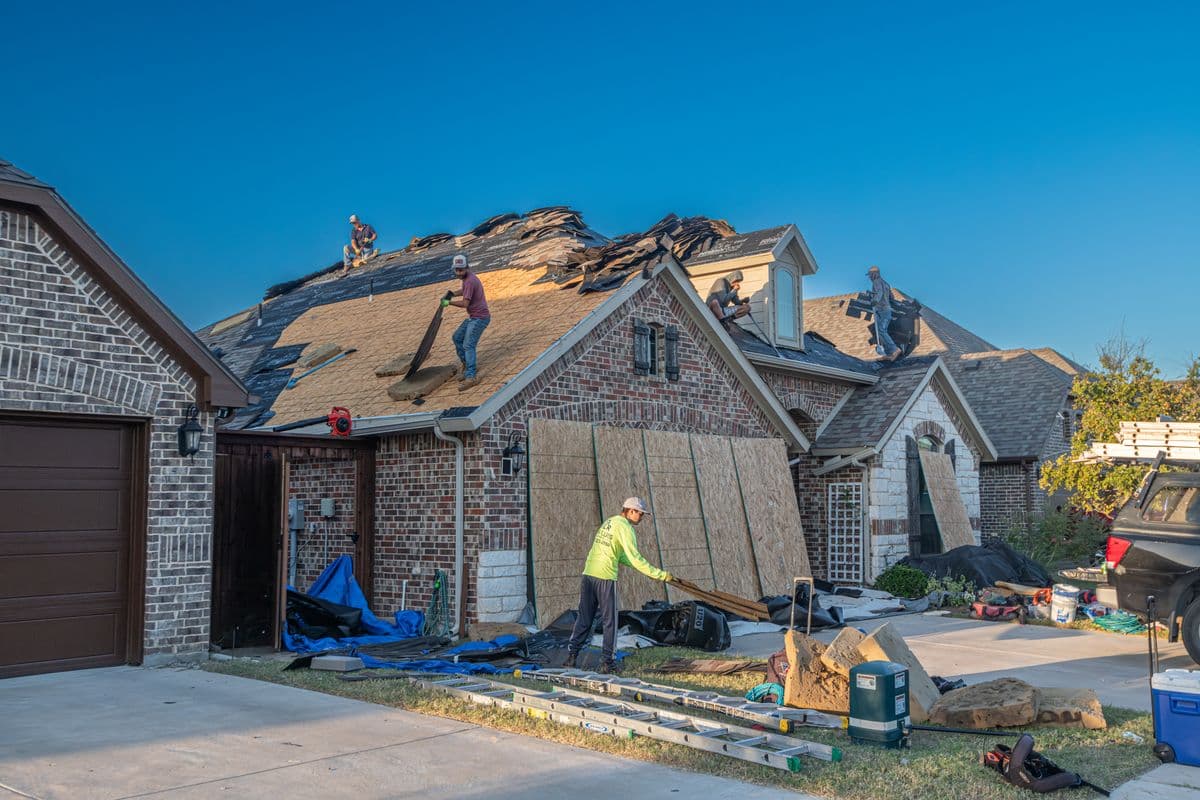
| Wind / Hail Impact | 60+ mph straight-line winds, 1-inch+ hail | Roof penetrations, broken windows, damaged siding, chimney flashing | $1,500 - $30,000 | Standard homeowners covers wind and hail |
| AC / Mechanical Flooding | Power surge then restart, condensate overflow during extended outage | Attic HVAC units, garage water heaters, secondary condensate pans | $2,000 - $8,000 | Usually covered if storm-caused power surge is documented |
| Sewer Backup | Overloaded municipal lines during 100-year rain events | Floor drains, toilets, basement fixtures in lowest elevation | $5,000 - $40,000 | Requires sewer backup rider on homeowners policy |
We see the flash flood scenario most often during summer thunderstorms in Frisco. A homeowner on a Friday evening hears thunder, goes to check the garage two hours later, and finds 2 inches of water that has pushed in through the slab crack they noticed last summer. By the time they call us, that water has already wicked up the drywall and into the base cabinets.
What to Do Within the First Hour After Storm Damage
If water is near electrical outlets, appliances, or the main panel, shut off power at the breaker. Do not walk through standing water if there is any chance of live electricity. Wear boots and gloves if you need to enter a flooded area.
If the water is coming in through a specific entry point (open window, damaged roof area, garage gap), try to block or divert it. Sandbags, towels, or a tarp can reduce the flow while you wait for professional help.
Take photos and video of every affected area before moving anything. Open cabinets, show the water depth against baseboards, photograph the standing water level in each room. This documentation is your primary evidence for the insurance claim.
Report the claim immediately. Most carriers have 24-hour claim lines. Ask whether you have coverage for the specific type of water entry (surface water vs. sewer backup vs. wind-driven rain). Note your claim number and adjuster assignment.
Time is the only thing that matters in the first 24 hours. Call a 24/7 emergency restoration company immediately. Water that sits for 48 hours in a Frisco summer will begin to grow mold. The restoration company can start water extraction and drying while the insurance claim processes.
Furniture, electronics, documents, and personal items should be moved to the highest available floor or elevated surface. Do not stack wet items against dry walls. Separate wet fabrics and textiles from each other to prevent color transfer and mildew.
The Frisco Storm Restoration Process: What to Expect
Once you call, a restoration crew should arrive within 60 to 90 minutes in Frisco. Here is what happens next.
Assessment and water extraction. The first step is identifying all areas where water has entered and extracting standing water with industrial pumps and wet vacuums. This includes checking crawl spaces, under cabinets, and inside wall cavities with moisture meters.
Structural drying. After standing water is removed, the crew sets up air movers and dehumidifiers. In a Frisco summer with outdoor humidity at 65-75%, this process takes 3 to 5 days minimum. The drying target is below 15% moisture content in wood and below 60% relative humidity in the affected airspace.
Demolition and removal. Wet drywall, insulation, carpet, and padding that cannot be saved is removed. In Frisco, this typically means cutting drywall 12 to 24 inches above the water line, removing baseboards, and pulling carpet in affected rooms. This is not cosmetic work; it is the only reliable way to prevent mold colonization inside wall cavities.
Cleaning and sanitizing. All affected surfaces are cleaned with antimicrobial solutions. If the water was Category 2 or 3 (gray or black water from sewer backup or storm surge), a more aggressive sanitization protocol involving EPA-registered disinfectants is required.
Reconstruction. Once the structure is verified dry, reconstruction begins: hanging new drywall, installing new insulation, laying carpet or LVP flooring, painting, and baseboard installation. This phase can take anywhere from 1 to 4 weeks depending on the extent of the damage.
How to Navigate Insurance Claims After a Frisco Storm
Insurance claims for storm damage in Frisco follow a predictable pattern, but the details matter significantly.
Standard homeowners insurance (HO-3) covers wind and hail damage but excludes flood damage from surface water. The critical distinction is: did water enter through a wind-damaged roof (covered) or through foundation cracks because the ground flooded (excluded without flood insurance)? Restoration professionals can help document the entry point to support your claim.
Flood insurance (NFIP or private) covers surface water entry and is required if you want coverage for flash flood events. Many Frisco homeowners in non-flood-zone areas skip it, but as noted above, a significant percentage of claims come from those properties.
Sewer backup riders are a separate add-on. If the storm overwhelmed Frisco's municipal drainage system and caused sewage to back up into your home, you need this specific endorsement on your policy.
We always recommend reading the adjuster's estimate carefully before authorizing work. Frisco homeowners frequently find that the initial adjuster estimate misses secondary damage: moisture inside wall cavities, subfloor damage under tile, or mold growth behind baseboards. A reputable restoration company will identify these during the drying process and work with the adjuster to amend the scope.
If there is a dispute on the claim scope, Texas Department of Insurance regulations allow for a reappraisal process. Do not accept a lowball estimate without a second opinion from a licensed restoration contractor who has experience with Frisco claims specifically.
Preparing Your Frisco Home for Next Storm Season
The most cost-effective storm damage prevention is done before the storm hits. Here are the specific actions Frisco homeowners should take.
Check your foundation for cracks every spring. Walk the perimeter of your slab foundation in March or early April. Any crack wider than a credit card (roughly 1/8 inch) should be sealed with a flexible polyurethane caulk designed for concrete. This is a $40 DIY fix that can prevent thousands in water damage. Pay special attention to the garage slab-to-foundation joint, which is a common water entry point in Frisco homes.
Clean gutters and downspouts before May. Frisco's oak and pecan trees drop significant debris. Clogged gutters during a 2-inch-per-hour rain event send water cascading over the sides and pooling against the foundation. Ensure downspouts extend at least 5 feet away from the foundation wall.
Inspect your roof for loose or missing shingles. After any significant wind event, check for lifted shingles, damaged flashing around vents and chimneys, and granules in the downspouts. Hail damage in DFW is often invisible from the ground but can create leaks that only show up during the next heavy rain.
Test your sump pump. If you have a basement, crawl space, or below-grade finished area with a sump pump, test it in April by pouring a bucket of water into the pit. Clean the intake screen and ensure the discharge line is clear and draining away from the foundation.
Review your insurance coverage annually. The most painful discovery is finding out after a storm that you do not have coverage for the type of damage you have. Review your policy declarations page every spring and discuss with your agent whether flood coverage or a sewer backup rider makes sense for your specific Frisco address.
Frequently Asked Questions About Frisco Storm Damage
Does Frisco flood? I thought we were not in a flood zone.
Frisco has areas within FEMA-designated flood zones (primarily along Panther Creek and its tributaries), but flash flooding from overwhelmed storm drains can affect homes outside those zones. During a 4-inch-in-2-hours summer storm, the drainage system backs up and water finds the lowest path, which may be your garage or crawl space regardless of FEMA designation. Over 40% of flood claims nationally come from properties outside high-risk zones.
How fast does mold grow after flood damage in Frisco?
In Frisco's summer climate (daytime temperatures in the 90s, humidity at 60-75%), mold can begin colonizing wet drywall within 24 to 48 hours. Mold growth after water damage in DFW accelerates because the high ambient humidity prevents natural drying. Professional drying equipment is the only reliable prevention once water has entered the structure.
Will my homeowners insurance cover storm flooding in Frisco?
Standard HO-3 policies cover wind-driven rain (rain that enters through a wind-damaged roof or window) but exclude surface water flooding (water that rises from the ground and enters through foundation cracks or low openings). If your damage is from surface water flooding, you need a separate flood insurance policy through NFIP or a private carrier. Sewer backup requires a separate rider.
How long does storm damage restoration take in Frisco?
The full restoration process from initial extraction to final reconstruction typically takes 2 to 6 weeks in Frisco. The drying phase alone takes 3 to 5 days. Reconstruction (drywall, flooring, painting) depends on material availability and contractor scheduling. During peak storm season, restoration companies in Frisco may be booked 1 to 2 weeks out for reconstruction work, which is why early engagement matters.
What should I do if I see water in my Frisco garage during a storm?
Move anything off the garage floor immediately. Check the garage-to-slab joint for cracks where water is entering. If water is actively flowing in, try to divert it with a towel or shop-vac. After the storm passes, dry the garage completely and seal any cracks with concrete caulk. If water entered through the overhead door seal, consider replacing the bottom seal and having a drainage channel installed in the garage floor.
Does GOAT Home Services serve the entire Frisco area?
Yes. We serve all of Frisco, from Plantation Resort and Stonebriar to Panther Creek and the newer developments north of Lebanon Road. Our standard response time to any Frisco address is under 90 minutes. Contact us at (469) 525-2254 for emergency storm damage or schedule a non-emergency inspection of your property's storm readiness.
Summer storms in Frisco are not a matter of if but when. The homes that come through them with the least damage are the ones whose owners had a plan before the clouds rolled in. Know where the cracks in your foundation are. Know what your insurance covers. And have a restoration company on speed dial, because when the water stops rising, the clock starts ticking on mold growth.
If a storm hits your Frisco home tonight, call GOAT Home Services at (469) 525-2254. We are here 24/7, and we live and work in the same Collin County neighborhoods you do.