
Quick Answer
See real mold remediation costs in Carrollton, TX: $500-$30,000. Owner-operated by Graham & Heidi, 10+ years. Insurance claims help. Free same-day inspection.
If you are searching for mold remediation costs in Carrollton, TX, you probably found mold somewhere in your home and are trying to figure out how bad the damage to your wallet is going to be. Here is the straight answer based on the hundreds of mold jobs we have handled across DFW.
A typical mold remediation job in Carrollton runs between $500 and $30,000+. That range is wide because the situation determines the cost. A small patch of visible mold under a sink in an older Carrollton home off Keller Springs Road costs a few hundred dollars to treat. A full-structure remediation after months of undetected moisture in a house near Rosemeade Parkway can run tens of thousands. This guide breaks down what you can expect to pay, what drives the cost, and how to avoid overpaying.
For a full breakdown of what drives mold remediation prices in DFW, see our DFW restoration cost guide.
We have responded to mold calls across Carrollton, Dallas, Plano, Frisco, McKinney, Arlington, Garland, Irving, Fort Worth, Lewisville, and every DFW suburb in between. The cost patterns are consistent across the metroplex. The surprises are predictable. This guide covers both the numbers and the things no one tells you until you are three days into a remediation project.
What You Are Paying For When You Pay for Mold Remediation
Mold remediation is not one service. It is a sequence of services layered on top of a moisture problem that needs to be solved first. Understanding what each phase costs helps you see where your money goes and whether a quote is reasonable.
Mold Inspection and Testing
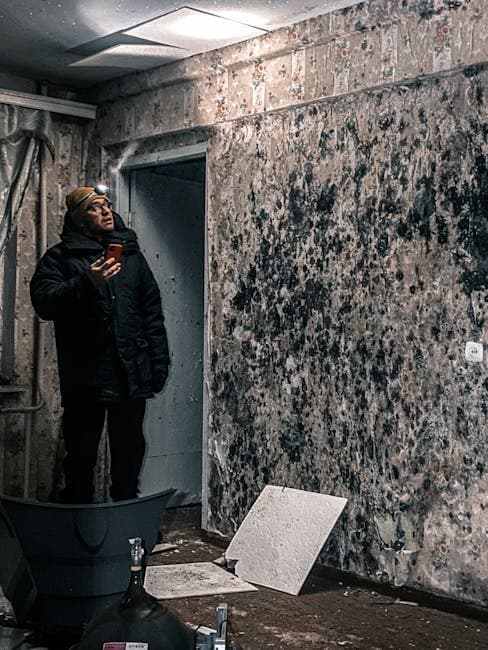
Most reputable restoration companies, including us, bundle the initial inspection into the overall remediation cost. A standalone mold inspection from a certified third party typically runs $300 to $600 for a visual inspection with moisture mapping. If air quality testing is needed, taking air samples from inside and outside the home for lab analysis, that adds $200 to $400 per sample. A typical inspection runs 3 to 6 samples depending on the home size and the suspected affected area.
In Carrollton, we see homes built between the 1970s and 2000s that have had slow plumbing leaks for years before anyone noticed. In those cases, the inspection alone can save you thousands because it tells you exactly where the moisture is that you cannot see.
Our recommendation: if you suspect mold, do not pay for a separate inspection if the remediation company you are considering offers a free assessment. Most do. Paying a third-party inspector makes sense only if you want an independent assessment without a remediation contractor involved.
Localized Mold Treatment
For small, contained mold growth, under 10 square feet, the cost is straightforward:
- Small patch, visible surface mold: $500 to $1,500. This covers treating a contained area such as mold on a bathroom wall from a leaking shower fixture, a small spot in a closet from a roof leak that was already fixed, or mold around a window frame from condensation.
- What is included: HEPA vacuuming of the affected area, antimicrobial application to kill remaining spores, containment setup (plastic sheeting and negative air pressure), and a post-treatment moisture check. No drywall removal is needed because the material can be cleaned in place.
This is the only level of remediation that approaches DIY territory. If the area is under 10 square feet, the source of moisture has been fixed, and you are comfortable working with a respirator and HEPA vacuum, you can handle this yourself. For anything larger, do not. The risk of spreading spores to the rest of your home is real, and the containment equipment rental alone often approaches what a professional would charge.
Room-Scale Remediation
When mold has spread across a single room, typically from an undiscovered leak behind a wall or under a floor, the cost jumps significantly:
- Single room, moderate contamination: $2,000 to $6,000. This is the most common mold job we see in DFW homes. A bathroom with a hidden pipe leak that has been active for weeks, a bedroom where a window leak allowed moisture into the wall cavity, or a laundry room with a slow appliance leak.
- What is included: Full containment with plastic sheeting and negative air pressure, removal of affected drywall (typically 12 to 24 inches above the water line), removal of baseboards and trim, treatment of exposed studs and framing, HEPA vacuuming of the entire room, antimicrobial application, and disposal of contaminated materials. Drying equipment runs for 3 to 5 days with daily moisture checks.
The drywall removal and replacement cost is where the variability lives. If the mold is on the surface only and the drywall can be cleaned, you save the demolition cost. If the mold has penetrated the drywall core, removal is the only option. We use a moisture meter and thermal imaging camera to determine which materials can be saved before we start cutting.
Multi-Room and HVAC Remediation
When mold has spread beyond one room or has entered the HVAC system, the cost increases because containment and cleaning become more complex:
- Multi-room or HVAC-related contamination: $6,000 to $15,000. This covers mold that has spread through shared wall cavities, under multiple rooms of flooring, or through the air handler system.
- What is included: Room-by-room containment with multiple negative air machines, HEPA filtration of the entire affected zone, removal of any contaminated drywall, flooring, and insulation, treatment and sealing of exposed framing, HVAC cleaning by a NADCA-certified technician including ductwork, air handler, and coil cleaning, and a post-remediation clearance test.
This scenario is more common in Carrollton and other DFW suburbs than most homeowners realize. DFW's humid climate means the HVAC system runs 8 to 9 months a year. If mold gets into the ductwork through a leaky return or a wet air filter, it circulates throughout the house. By the time you smell it in a second room, it is already in the ducts.
Full-Structure Remediation
In cases of widespread contamination, often from floodwater, a long-undetected slab leak, or months of high humidity in a crawl space, the entire structure needs to be addressed:
- Whole-home or large-area remediation: $15,000 to $30,000+. This is the worst-case scenario and thankfully the rarest. We see it most often in homes where the homeowners did not discover the moisture for 6 months or more, by which time mold has colonized wall cavities across multiple rooms, subflooring is compromised, and the HVAC system is fully contaminated.
- What is included: Complete containment of the structure, removal of all contaminated building materials (drywall, insulation, flooring, baseboards, trim, cabinets where mold has penetrated), treatment and sealing of all exposed framing, HVAC system replacement in extreme cases (some duct systems cannot be fully cleaned once colonized), and full post-remediation verification testing. Reconstruction after remediation adds 50 to 150 percent of the remediation cost on top.
The key thing to understand about full-structure remediation: the cost is driven by what the mold has touched, not what you can see. Visible mold is usually the tip of the iceberg. In DFW homes with slab foundations, water can wick through the concrete and into wall framing without any visible wetness on the surface. By the time mold is visible at the base of a wall, the fungal growth inside the wall cavity is typically extensive.
What Drives Mold Remediation Costs in DFW
Beyond the size of the affected area, several factors unique to North Texas consistently affect remediation pricing:
1. Humidity and Drying Time
DFW's summer humidity routinely hits 70 to 85 percent. After mold removal, the affected area must be dried to the IICRC dry standard before reconstruction can begin. In high humidity, the same drying equipment that clears a home in a dry climate in 3 days takes 7 days here. That extra equipment run time adds cost. Commercial dehumidifiers and air movers consume significant electricity, and the rental cost is typically passed through to the homeowner. A job that needs 5 days of drying in a dry climate may need 8 to 10 days in DFW during July or August.
2. Building Materials in DFW Homes
Carrollton's housing stock spans multiple eras. Mid-century homes near the historic downtown area were built with different materials than the newer construction north of President George Bush Turnpike. Older homes often have plaster walls, which behave differently when wet than modern drywall. Plaster absorbs moisture slowly but releases it even slower, extending the drying time and sometimes requiring more aggressive demolition. Newer homes use engineered lumber and oriented strand board (OSB) sheathing, which can delaminate when wet and often cannot be saved. The age of your home affects both the remediation approach and the cost.
3. Accessibility of the Mold
Mold in an open basement wall is cheap to remediate because the crew can reach it easily. Mold inside a finished wall cavity behind kitchen cabinets requires removing the cabinets, cutting the drywall, treating the framing, and replacing both the drywall and the cabinetry. Mold in a crawl space with 18 inches of clearance requires a crew working in restrictive conditions, extending the timeline. We have done mold jobs in Carrollton homes where the mold was in a finished attic space; those are the most expensive per square foot because of the difficulty of containment and access.
4. Mold Type
Not all mold is treated the same way. Mold remediation protocols vary by species. Black mold (Stachybotrys chartarum) requires the highest level of containment because its mycotoxins are hazardous. The protocols for black mold remediation include full isolation of the affected area, negative air pressure with HEPA filtration on all exhaust air, and full personal protective equipment for the crew. These protocols add labor and material costs compared to remediating a non-toxic mold species on a bathroom ceiling. We do not know what type of mold is present until we test it, which is one reason the final cost can vary from the initial estimate.
Real DFW Scenarios and Typical Costs
Rather than abstract ranges, here are specific scenarios we see regularly in Carrollton and across DFW, with realistic cost estimates:
Scenario 1: Bathroom Exhaust Fan Leaking Moisture
A Carrollton home near Hebron Parkway has a bathroom exhaust fan that was never vented to the outside: it just blows moist air into the attic. Over two years, the attic sheathing above the bathroom developed black mold across a 4x6-foot area.
- Inspection and testing: $0 (bundled)
- Localized mold treatment: $800 to $1,400
- HVAC check: $200 to $400 to confirm mold is not in the ductwork
- Fan re-venting: $300 to $600 by a licensed electrician or HVAC contractor
- Total estimate: $1,300 to $2,400
Scenario 2: Hidden Leak Behind a Kitchen Sink
In a Plano home built in the 1990s, a slow leak at the kitchen sink supply line went undetected for months. Water soaked into the cabinet base, wicked up the drywall on both sides of the cabinet, and mold developed inside the wall cavity.
- Containment and demo: Remove wet drywall on two wall sections, remove damaged cabinet toe kick and particle board cabinet base. $600 to $1,200.
- Treatment: Antimicrobial treatment of exposed studs and subfloor. $400 to $800.
- Drying: 4 air movers, 2 dehumidifiers, 4 days. $800 to $1,500.
- Reconstruction: New drywall, tape, mud, texture, paint. New cabinet base and toe kick. $1,500 to $3,000.
- Total estimate: $3,300 to $6,500
Scenario 3: Flooded Crawl Space in an Older Frisco Home
A Frisco home with a crawl space foundation had groundwater intrusion during the spring rains. The crawl space remained damp for weeks, and mold colonized the floor joists, subflooring, and insulation.
- Containment: Sealing the crawl space vents and access points. $500 to $1,000.
- Removal: Remove all contaminated insulation, treat all exposed joists and subfloor. $2,000 to $4,000.
- Drying: Industrial dehumidifiers in the crawl space run for 7 to 10 days. $2,000 to $4,000.
- New insulation: Install vapor barrier and new crawl space insulation. $1,500 to $3,000.
- Groundwater mitigation: French drain or sump pump installation ($2,000 to $5,000) is often needed and is a separate cost.
- Total estimate: $6,000 to $12,000 plus drainage work.
If the mold had reached the subfloor and floor joists to the point of structural compromise, framing repairs add another $3,000 to $8,000. The window between "clean it" and "replace it" is short in DFW's humid climate.
Does Homeowners Insurance Cover Mold Remediation?
This is the most common question we get about mold costs. The answer is: it depends entirely on why the mold is there. In Texas, standard homeowners policies are governed by specific rules about mold coverage.
When Insurance Typically Covers Mold
- Mold caused by a covered water loss. If a burst pipe flooded your living room, and mold developed as a result because drying was not possible immediately, the mold remediation is typically covered as part of the original water damage claim. Most standard HO-3 policies include what is called "limited mold coverage," usually up to $10,000 to $25,000 depending on your carrier and policy form.
- Mold from fire suppression water. We covered this in detail in our fire damage guide: if the fire department's water caused mold to develop, that is part of the fire claim.
- Mold from a covered storm event. If wind-driven rain entered your home through storm damage, and moisture caused mold, the remediation is generally covered.
When Insurance Does NOT Cover Mold
- Mold from humidity or condensation. Texas insurance policies explicitly exclude damage from moisture that results from humidity, condensation, or gradual seepage. If your bathroom fan was never vented, or your crawl space has always been damp, that is considered a maintenance issue.
- Mold from long-term leaks. If a leak has been active for months and you knew about it or should have known about it, coverage is typically denied. Insurers consider this "continuous or repeated seepage or leakage," which is a standard exclusion.
- Mold from floodwater. Standard homeowners policies do not cover flood damage at all. If mold developed from floodwater, you need a separate flood insurance policy through the NFIP or a private flood carrier.
- Mold testing and inspection. The cost of identifying the mold is often excluded even if the remediation is covered. Some carriers allow it as part of the claim, but it is not guaranteed.
How Texas Mold Laws Affect Coverage
Texas underwent significant changes to mold-related insurance law following the early-2000s mold litigation wave that drove several carriers out of the Texas market. The result is that Texas policies now have some of the most restrictive mold coverage language in the country. Most carriers cap mold coverage at $10,000 to $25,000, require mold to result directly from a covered water loss, and expressly exclude mold that results from any leak that was not "sudden and accidental."
If you are not sure whether your policy covers your specific situation, call your agent before you start work. We can give you a detailed estimate, and your agent can tell you whether it falls within the policy's mold coverage limits. We work directly with insurance companies to document the scope and negotiate coverage where possible.
Red Flags That Mean You Are Overpaying
Mold remediation is an industry where pricing varies widely between companies because the scope is hard for homeowners to verify. Here are the specific things to watch for:
1. Quotes Given Without an Inspection
Any company that gives you a firm price over the phone without coming to your home is guessing. Mold remediation costs depend on actual conditions: how far the mold has spread, what materials it has penetrated, whether the moisture source has been identified and fixed, and what access constraints exist. A reliable quote requires a site visit with a moisture meter and thermal imaging camera. If a company quotes you a price without an inspection, they are either inflating the price to cover unknowns or planning to cut corners.
2. Pressure to Sign Immediately
If a company tells you that you need to sign a contract today or the price goes up, walk away. Mold remediation is time-sensitive but does not change price by the hour like a water emergency does. The difference between starting today versus tomorrow does not meaningfully affect the scope of work. We tell our customers exactly that: get multiple quotes, compare them, and decide when you are comfortable.
3. "We Can Remove All Mold for One Flat Price"
Mold remediation is discovery-based work. We start with the visible mold and test as we go. When we open a wall and find more contamination behind it, the scope changes. A good remediation company writes a scope for what is visible, then supplements the scope if hidden mold is found during demolition. A flat-price quote for "all mold" means the contractor has priced in enough margin to cover the worst case, and you are paying for that worst case even if the actual job is simple.
4. No Post-Remediation Verification
A quality mold remediation job ends with a clearance test: either visual inspection with a moisture check or full air quality testing to confirm spore levels are within normal range. If a company does not offer post-remediation verification, there is no way to confirm the mold was actually removed. We include a post-remediation moisture check on every job and recommend third-party air quality testing for larger projects where the homeowner wants independent confirmation.
5. No Mention of Fixing the Moisture Source
If a remediation company does not involve identifying and fixing the water source as part of the process, the mold will return. Remediation treats the symptoms. Fixing the leak, improving ventilation, or installing a vapor barrier addresses the cause. A complete mold remediation plan includes both. If your contractor only talks about cleaning the mold and does not ask about where the moisture is coming from, find someone else.
The Bottom Line on Mold Remediation Costs in Carrollton and DFW
Here is what we want every DFW homeowner to take away from this guide:
- A small, contained mold spot under 10 square feet runs $500 to $1,500. You can consider DIY if the area is truly small, the source is fixed, and you are comfortable with proper safety gear.
- A single-room remediation runs $2,000 to $6,000. This is the most common job we do in Carrollton and across DFW.
- Multi-room or HVAC contamination runs $6,000 to $15,000. Common in homes where a leak went undetected for months.
- Full-structure remediation runs $15,000 to $30,000+. Rare, but devastating when it happens.
- Reconstruction after remediation typically adds 50 to 150 percent of the remediation cost.
- Insurance covers mold only when it results from a sudden covered loss. Gradual moisture, humidity, and condensation are almost never covered.
- Identifying and fixing the water source is as important as removing the mold. Any remediation plan that ignores the moisture source is incomplete.
- Get a site inspection before you get a quote. A reliable price requires someone in your home with the right tools.
Mold remediation is expensive, but delaying makes it more expensive. If you see mold in your Carrollton home, have it assessed. The cost of knowing what you are dealing with is free when you call the right company. The cost of waiting is the difference between a $1,500 job and a $15,000 job.
GOAT Home Services provides mold remediation services throughout Carrollton, Dallas, Plano, Frisco, McKinney, Arlington, Garland, Irving, Fort Worth, Lewisville, Allen, Richardson, and every DFW suburb in between. We respond 24/7 with free on-site assessments. Our team holds IICRC certifications for mold remediation. We work directly with your insurance company to document the scope and manage the claim from start to finish. Call (469) 525-2254 for a free assessment and a straight answer about what your mold remediation will cost. No obligation. No hidden fees.