

Quick Answer
Not sure if you have a mold problem? Learn the 7 warning signs that indicate you need professional mold testing and remediation in Dallas, Plano, Frisco, or McKinney.
Mold is sneaky. It grows in walls, under floors, inside crawl spaces, and above ceilings, and by the time you see visible signs, the problem is often bigger than it looks. In Dallas-Fort Worth, where summer humidity hovers between 70 and 85 percent and clay soil traps moisture against foundations, mold is a year-round risk for homeowners in Plano, Frisco, McKinney, Arlington, and Garland. Here are seven warning signs that tell you it is time to call a professional mold remediation company.
1. Persistent Musty or Earthy Odor
The smell comes first. Mold produces microbial volatile organic compounds, or mVOCs, that create that damp, earthy, musty odor. You cannot see them, but you can smell them. If you notice a persistent odor that:
- Gets stronger in certain rooms or areas of your home, especially bathrooms, laundry rooms, or near water heaters
- Persists even after thorough cleaning, airing out, or running fans
- Worsens when your HVAC system runs, suggesting mold in or near ductwork
- Is noticeable in closets, cabinets, or crawl spaces where air does not circulate
You likely have hidden mold growth behind walls, under flooring, or inside ceiling cavities. In older Dallas neighborhoods like Lakewood, Preston Hollow, and Oak Cliff, aging plumbing inside walls makes hidden mold especially common.
2. Visible Mold Growth, Even Small Spots
This one seems obvious, but homeowners consistently underestimate what they see. Mold is not always the black, fuzzy patch you imagine. It shows up in many forms:
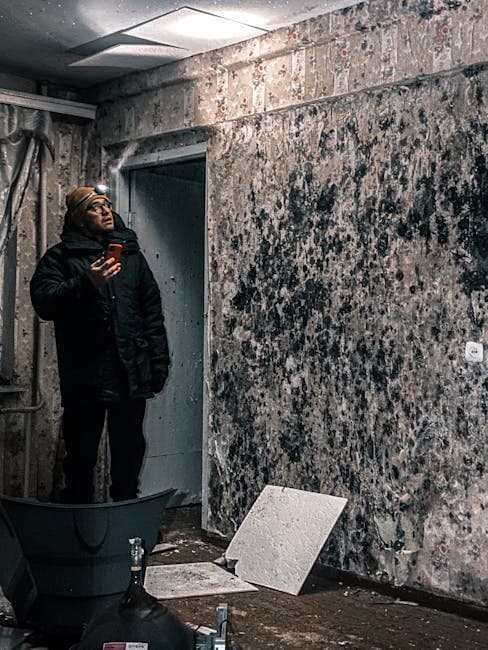
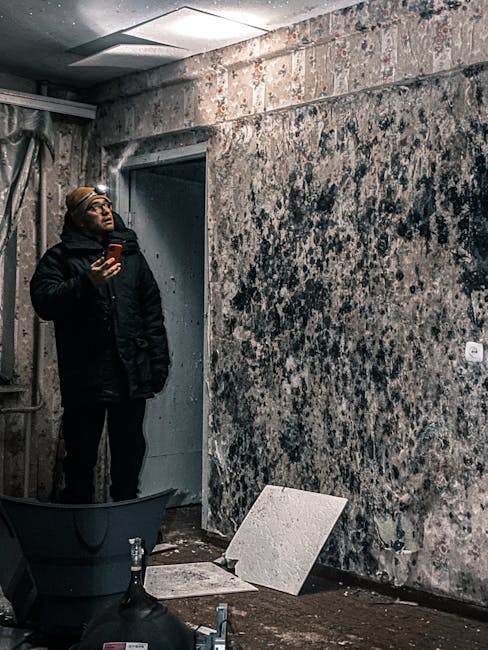
- Black spots or streaks on drywall, ceilings, or around window frames
- Green or gray patches in bathroom grout, caulking, or shower corners
- White, fuzzy growth in attics, crawl spaces, or on stored items
- Orange or pink film in showers, especially on soap scum or grout
- Brown or yellow stains on walls or ceilings that do not wash off
- Powdery or dusty patches on wood, cardboard, or fabric in storage areas
If visible mold covers more than 10 square feet, which is roughly a 3-foot by 3-foot area, professional remediation is the safest route. If it appears in multiple locations, even small spots, you likely have a systemic moisture problem that requires professional assessment.
3. Recent Water Damage, Even If You Think It Is Dry
If your home has experienced any of the following in the past few months, mold may be growing right now in areas you cannot see:
- Flooding or storm water intrusion, especially after DFW flash flooding events
- Burst or leaking pipes, common during North Texas freeze events like Winter Storm Uri
- Roof leaks from hail damage or wind-driven rain
- Appliance malfunctions: dishwasher overflow, washing machine discharge, water heater rupture, refrigerator ice maker leak
- Sewage backup or drain overflow
- Foundation cracks allowing groundwater entry, common in Allen, McKinney, and Garland due to expansive clay soil
- Overflowing bathtub or sink
Even if water damage was "dried out" with fans, mold can develop in hidden areas that were not fully dried. Wall cavities, insulation, subfloors, and the back sides of drywall rarely dry with surface-level airflow.
4. Health Symptoms That Improve When You Leave Home
Mold exposure affects people differently, but there are consistent symptom patterns. Consider professional mold testing if anyone in your household experiences:
- Respiratory issues: Coughing, wheezing, shortness of breath, or asthma flare-ups that are worse at home
- Allergic reactions: Sneezing, runny nose, nasal congestion, or itchy eyes that improve outdoors
- Skin irritation: Rashes, hives, or itching without a clear cause
- Headaches that improve when you leave the house and return when you come back
- Chronic fatigue or feeling tired despite adequate sleep
- Memory issues, brain fog, or difficulty concentrating that seem environment-dependent
- Frequent sinus infections or sore throats without other illness
The key diagnostic question is this: do symptoms improve when you leave home and return when you come back? If the answer is yes, indoor air quality is almost certainly the cause. In homes with forced-air HVAC systems common in Frisco, Plano, and McKinney, mold spores can circulate to every room through ductwork.
5. Peeling, Bubbling, or Warping of Surfaces
Moisture trapped behind walls and under floors causes visible damage long before mold becomes obvious. Watch for:
- Paint peeling or bubbling on walls or ceilings, especially near bathrooms, kitchens, or exterior walls
- Wallpaper lifting at seams or bubbling behind the surface
- Baseboards warping, separating from walls, or showing dark stains at the bottom
- Flooring buckling or cupping, especially hardwood or laminate near exterior walls or plumbing
- Drywall that feels soft or spongy when pressed, indicating saturation behind the surface
- Ceiling stains that grow or change shape after rain
These signs indicate moisture intrusion, and where moisture persists, mold is almost certainly present. In DFW homes built on expansive clay soil, foundation movement creates cracks that allow water entry, making these symptoms especially common in Garland, Richardson, and older Dallas neighborhoods.
6. High Humidity and Persistent Condensation
Chronically high indoor humidity creates ideal mold conditions. In Dallas-Fort Worth, where outdoor summer humidity regularly reaches 70 to 85 percent, indoor humidity control is a constant battle. Look for:
- Condensation on windows, especially in winter when indoor and outdoor temperatures differ significantly
- Foggy windows or mirrors that do not clear quickly
- Indoor humidity consistently above 60 percent on a hygrometer
- Clothes or towels that do not dry properly indoors
- Rust on metal surfaces indoors, such as on hinges, fixtures, or appliances
- A clammy feeling in the air, especially in basements or lower levels
If you are struggling with humidity control even with air conditioning running, there may be underlying moisture sources feeding mold growth. Leaky plumbing inside walls, foundation seepage, or roof leaks add moisture faster than your AC can remove it.
7. Previous Mold Problems That Were Not Fully Resolved
If you have had mold before, you are at higher risk for recurrence. Mold returns when the underlying conditions are not fully resolved. Watch for:
- Previous remediation that treated visible mold but did not address the moisture source. The EPA mold guidance emphasizes that fixing the moisture source is the only way to prevent recurrence.
- DIY cleanup that removed surface mold but left roots and spores in porous materials
- Recurring water issues in the same areas: the same leak, the same damp spot, the same musty closet
- Older homes with aging plumbing, roofing, or foundation issues, common in Dallas, Richardson, and Garland
- Homes with previous flooding, even years ago. Floodwater leaves behind organic contaminants that support mold long after the water is gone.
Mold is not a one-time problem unless the moisture source is permanently fixed. If water keeps getting in, mold keeps growing back.
DFW-Specific Mold Risk Factors
North Texas homeowners face unique mold challenges that make professional help even more important:
- Summer humidity: DFW summer humidity often hits 70 to 85 percent. Even after a leak is fixed, the ambient air keeps materials damp long enough for mold to take hold.
- Expansive clay soil: The black clay soil in Dallas, Allen, McKinney, and Garland expands when wet and contracts when dry, creating foundation cracks that allow moisture intrusion.
- Aging infrastructure: Older neighborhoods in Dallas, Richardson, and Garland have plumbing and roofing that is decades past its expected lifespan. Slow leaks inside walls are a leading cause of hidden mold.
- Post-flood conditions: After flash flooding events in Plano, Frisco, and McKinney, mold develops within 24 to 48 hours if materials are not aggressively dried.
- HVAC ductwork: In hot Texas summers, air conditioning runs constantly. If mold is in your ductwork, it spreads spores to every room.
Why Waiting Costs More
If you recognize any of these seven signs, do not wait. Early intervention prevents:
- Spread to larger areas. A small patch of mold can colonize an entire room within weeks.
- Structural damage. Mold breaks down wood, drywall, and insulation, weakening walls and floors.
- Worsening health effects. The longer you are exposed, the more sensitive you may become.
- Significantly higher remediation costs. A $500 early inspection beats a $10,000 remediation project.
- Difficulty selling your home. Mold disclosures are required in Texas. Documented mold history reduces buyer confidence and property value.
What to Do If You Suspect Mold
If you think you have a mold problem, follow these steps before calling a professional:
- Do not disturb it. Touching, scrubbing, or vacuuming mold releases thousands of spores into the air.
- Avoid the area as much as possible, especially if you or anyone in your home has allergies, asthma, or immune conditions.
- Do not use bleach on porous surfaces. Bleach kills surface mold but does not penetrate drywall or wood. The roots survive and regrow.
- Schedule a professional inspection. A certified mold inspector can assess the full extent, identify hidden growth, and test air quality.
- Document everything with photos for your records. Include date stamps.
What Professional Mold Inspection Includes
When you hire GOAT Home Services for a mold inspection in Dallas-Fort Worth, you get:
- Visual inspection of all accessible areas, including attics, crawl spaces, and behind appliances
- Moisture mapping with thermal imaging cameras and pin-type moisture meters to locate hidden moisture
- Air quality sampling to measure spore counts indoors vs. outdoors
- Surface testing to identify mold species and concentration
- A detailed report with findings, photos, moisture readings, and a remediation plan
- Documentation for your records and any professionals you hire
GOAT Home Services offers professional mold inspections and remediation throughout Dallas-Fort Worth. We serve Dallas, Plano, Frisco, McKinney, Arlington, Fort Worth, Irving, Garland, Allen, Richardson, and every city in between. If you suspect mold in your home, call (469) 525-2254 to schedule your inspection. Compare DIY vs professional mold removal to understand your options. We will identify the full extent of the problem and recommend the right course of action, whether that is a targeted treatment or full remediation.