
Quick Answer
Fuzzy black mold in a DFW home: what the texture really tells you, the EPA 10 square foot DIY line, and the Texas law that changes who you call first.
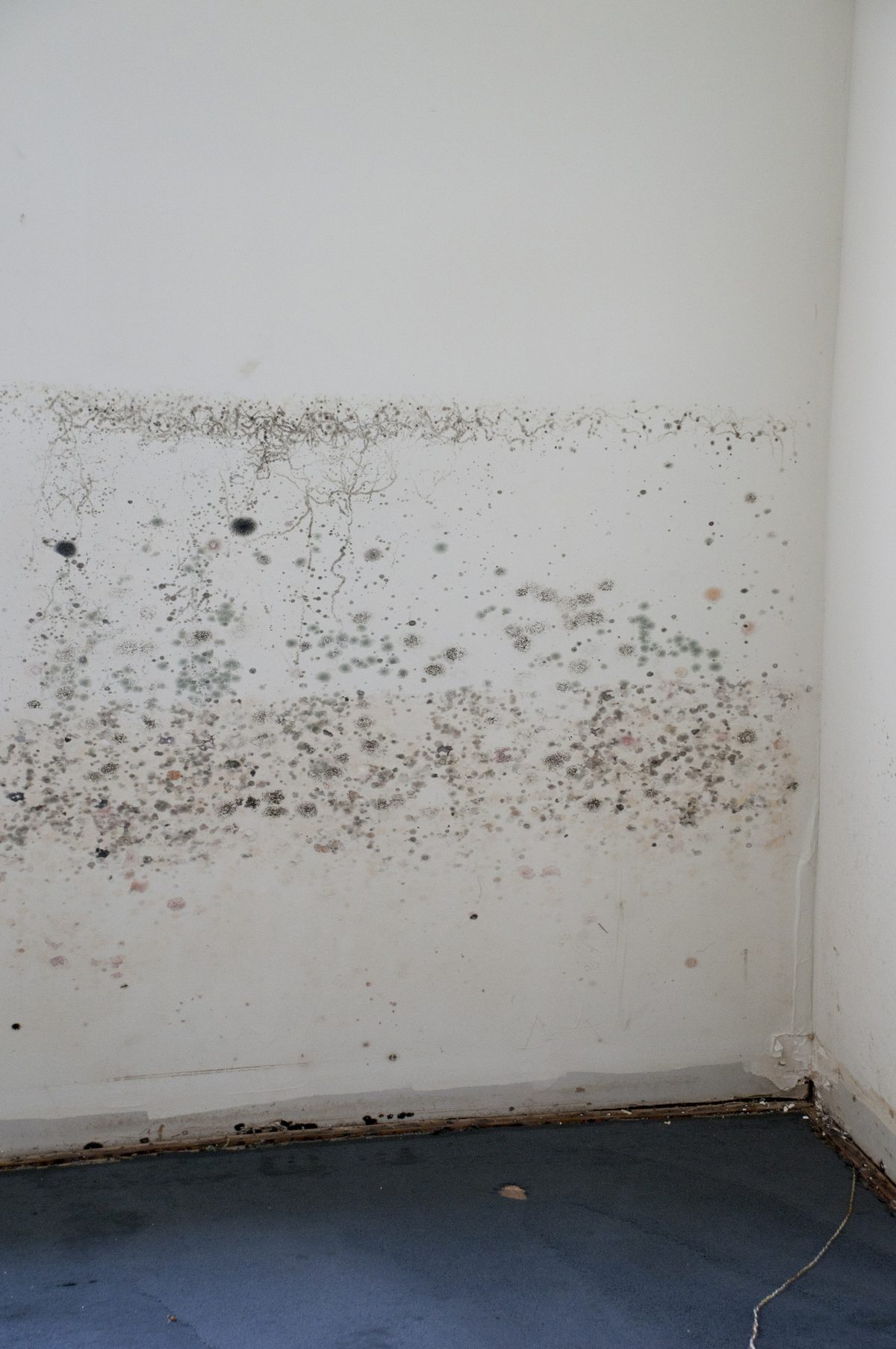
You found something dark and fuzzy on a wall and your mind went straight to the worst version of the story. Slow down. Color tells you almost nothing on its own, texture tells you a little, and the moisture behind the spot tells you everything. Here is how we walk DFW homeowners from first look to right phone call.
Before You Touch It: What You Need and What to Skip
Start with the two-minute setup. Get a bright flashlight, a phone camera, a disposable dust mask, and a sheet of plastic if you need to cover something. Then do nothing else. Do not scrub it, do not spray it, and do not take a swipe to "test" it.
Here is why we say that harder than most articles do. A dark patch is evidence of a moisture problem, and your job for the next hour is to document it, not disturb it. Once you smear dry mold across a room, you have turned a contained patch into an airborne one, and you have destroyed the texture evidence that tells you what you are dealing with. Photograph the patch from a foot away and from six inches. Note the room, the wall, and when you first noticed it.
Our stance: the single most valuable tool in a mold identification is a phone photo and a flashlight, and the single worst one is a sponge.
What the Fuzzy Texture Actually Tells You
This is the part the generic "black mold" pages get backwards. The American Phytopathological Society's reference feature on Stachybotrys chartarum, the fungus most people mean when they say toxic black mold, describes growth that looks slightly shiny when fresh and powdery when dry. It loves the paper facing on drywall, wallpaper, and dust-coated cellulose, and it shows up after materials have been genuinely wet.
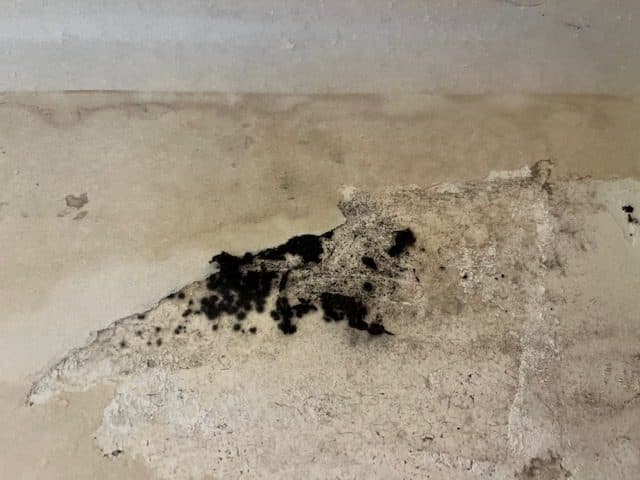
So a dry, fuzzy, velvety patch is usually not fresh Stachybotrys. Fuzzy and dry points at the broader mold family: Cladosporium, Aspergillus, wall molds that put up aerial spore structures when the surface has started to dry out. That is still mold. It still means there is, or was, a water problem. It is just not the panic-button version, and pretending every dark spot is Stachybotrys is how the internet sells test kits.
What the texture does earn you is a read on moisture status:
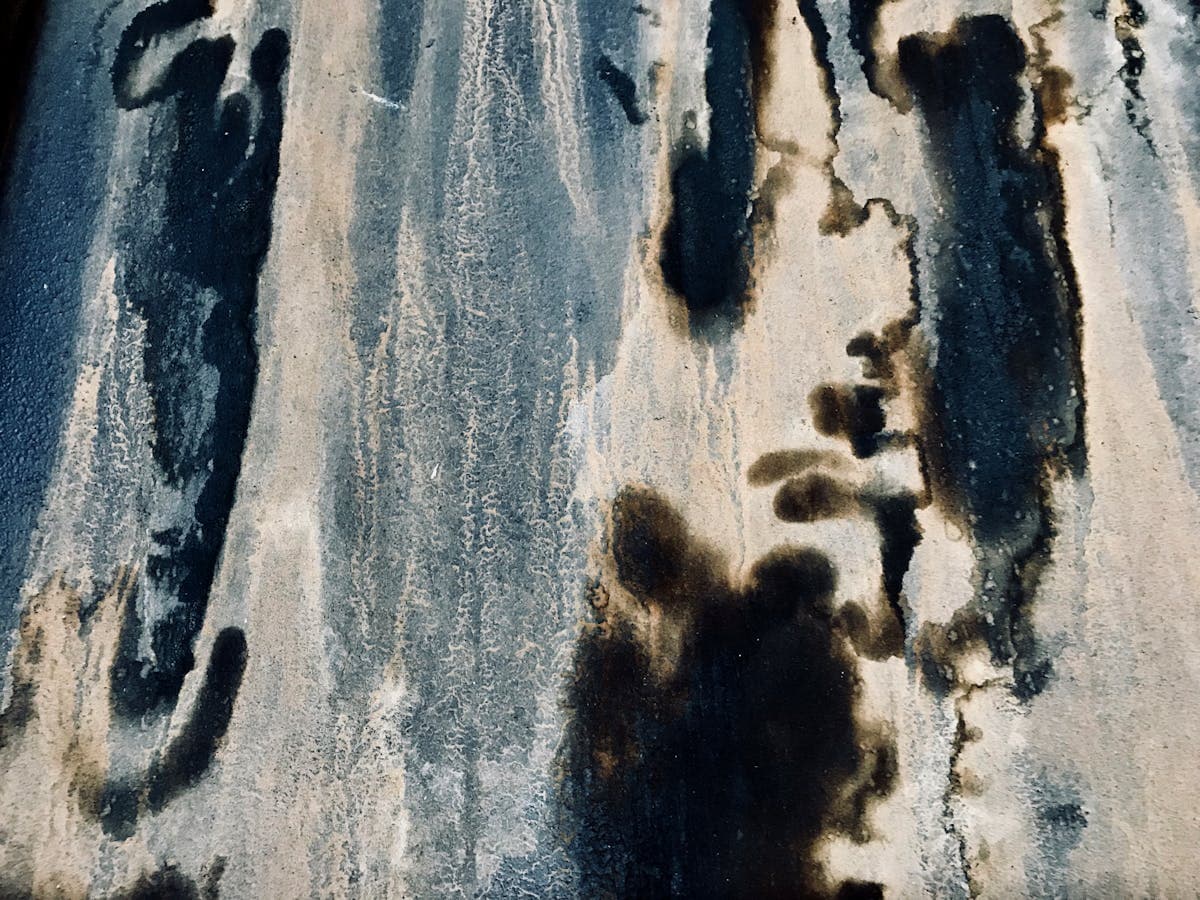
- Slimy, wet, or shiny dark growth: active moisture right now. Something is leaking, condensing, or wicking. - Fuzzy or powdery dark growth: the colony is established and the surface is drying or intermittent. The water may have already stopped, but the material is colonized. - Flat black staining with no texture: often staining or older growth embedded in the material rather than active colonies.
Our stance after years of DFW mold jobs: stop asking "is it toxic" and start asking "what got it wet, and is it still wet." That question decides your next move. The species question is for a licensed assessor, and most of the time it does not change the fix.
What Looks Like Black Mold but Isn't
Before you book anything, run the impostor list. In this metro the usual suspects are specific.
Soot and "ghosting" is the first one. Dark fuzzy-edged streaks along the top of walls, above registers, or behind curtains are often thermal staining from HVAC airflow, not biological growth. Ghosting wipes thin and greasy rather than spreading as colonies. The EPA's brief guide to mold is blunt that visible mold is confirmed by sight and smell, and that routine testing after you can already see growth is rarely needed: so the flip side is equally true, a patch that fails a simple look and smell check is probably not mold at all.
The second impostor is plain dirt and splash-back behind toilets and along baseboards. The third is older water staining under latex paint, which looks like a shadow with a feathered edge but has no surface growth at all.
Our stance: if it has no smell, no texture, and no moisture story behind it, it is very likely a stain. If it has a musty smell, treat it as mold until proven otherwise. Our musty smell guide covers hunting a smell you cannot see a source for.
The Real Diagnosis: Match the Patch to the Moisture Source
Location is the identification tool that actually works. A DFW patch is almost always tied to one of a handful of repeatable water stories, and matching your spot to a story tells you more than any color chart.
| What you see | Where it lives | Likely moisture story |
|---|---|---|
| Dark specks along the bottom edge of drywall | Baseboards, exterior walls, garage-adjacent rooms | Slab-edge wicking or splash-back; common in 1970s-80s slab-on-grade neighborhoods across Arlington and Grand Prairie |
| Fuzzy black patches on ceiling drywall paper | Below attics, under roof valleys, above bathrooms | Roof leak or attic condensation; DFW attic decks cook in humid summer air from May through September and earn condensation cycles all season |
| Dark growth on the cold side of an exterior wall | North walls, closets against exterior walls, behind furniture | Surface condensation while indoor air stays damp through the long humid DFW summer |
| Black streaks on the paper face inside a wall (found during opening) | Behind drywall near plumbing walls, under slab-era baths | A leak that ran and stopped; the material stayed wet long enough for colonization, exactly the drywall-paper growth APSnet documents |
| Patchy dark growth with a musty smell and no visible leak | Crawl-space homes (pre-1960 Oak Cliff and other older Dallas pockets) | Vent-driven crawl moisture wicking up wall cavities through the season |
One more DFW amplifier worth naming: our expansive Blackland Prairie clay moves foundations seasonally, and cracked slabs and shifted joints are water-intrusion pathways. A patch that keeps returning in the same spot on a slab home after you cleaned it is telling you the path is still open.
Our stance: the spot is the symptom, the water is the diagnosis. If you cannot name what got the material wet, you have not finished identifying the mold, no matter what the patch looks like. And if the spot keeps coming back, the clock on how fast this can spread matters more than the species; our mold growth timeline breaks down what a DFW summer does to wet drywall.
How Big Is It? The Size Line That Decides DIY vs. Pro
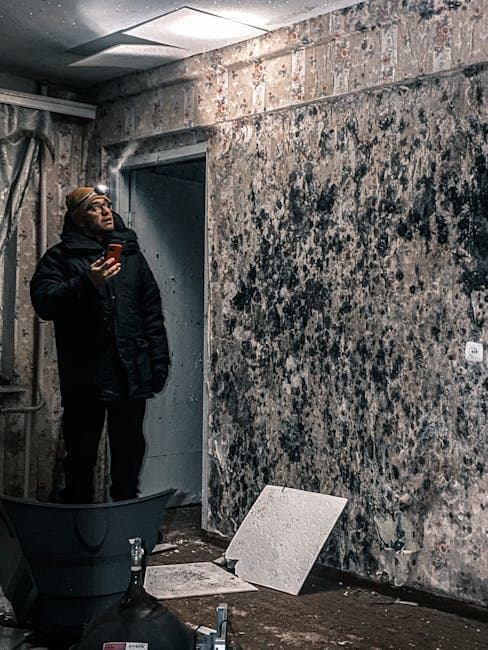
With the moisture story understood, the next call is scope. The EPA's cleanup guidance draws the line most of the industry works from: growth covering roughly 10 square feet or less on non-porous or lightly porous material, in a home without a hidden-water history behind that wall, is in honest homeowner-cleanup territory. Anything bigger, anything on porous material like drywall and insulation, or anything fed by water of unknown cleanliness, is a containment job.
Be honest about the "or less" part. Ten square feet is a sheet of drywall half its length. If the fuzzy patch has crept along a baseboard run or across a ceiling corner, you are usually past the line even when it feels small.
Our stance: the size line is real, but it applies to the visible patch only. A ten-inch surface patch over a wall cavity that has been damp for months is not a ten-inch job. If the drywall is soft, stained through, or the smell lives in the room, the real growth is behind the surface, and that is the situation our signs you need remediation checklist is built for.
When You Can Handle It Yourself, and When to Stop
Small, visible, and explained: the cleanup that is fine to do
These situations mean stop and call
The Texas call order nobody explains
Our stance: the licensing wall is your consumer protection; use it. If a company points at the fuzzy patch and quotes the removal in the same breath, that is not confidence, it is a licensing violation with a sales pitch attached.
What Legitimate Help Looks Like, Start to Finish
Here is the sequence that separates a real operation from a scare-artist. First, the license check takes two minutes: ask for the TDLR license number and run it on TDLR's license search before anyone sets foot inside. Then the assessment: a licensed mold assessment consultant examines the home, samples only where the findings warrant it, and delivers a written protocol that specifies what gets removed, from where, by what method, and what clearance looks like.
You then take that protocol to a remediation contractor of your choosing. On our side of the wall, that means our licensed remediation crews work to someone else's written scope, and our project manager J Smith carries the Texas Mold Remediation Contractor license while the assessment stays with an independent consultant. When the work finishes, the consultant re-inspects for clearance and the paperwork is concrete: TDLR requires a signed Certificate of Mold Damage Remediation no later than the 10th day after the project stop date, co-signed by the licensed consultant who did the post-remediation assessment.
Our stance: demand the protocol before the price argument. A company that cannot produce (or work from) an independent protocol has told you everything about how the job will be scoped: by their own sales team. Our mold remediation service page explains how we fit into the licensed sequence, and our Dallas black mold remediation guide goes deeper on what a real remediation contains.
Verify It Is Actually Done: Your Finish Line
The job is not over when the wall looks clean. Run this list before you consider the fuzzy patch closed. The moisture source is fixed, demonstrably: the leak is repaired, the roof penetration is sealed, or the humidity source is addressed, not just the mold killed. The affected porous material is out, not painted over: any paint, seal, or encapsulant over removed-material territory is a bandage, not a fix.
If you used the licensed route, you hold a written protocol and you have received the signed certificate within ten days of project end. If you handled a small patch yourself, watch the spot through one full DFW humidity season. May through September is when this metro separates real fixes from partial ones: humid DFW summers run for months, and any open moisture path shows itself again by July.
If a ceiling patch is involved, read our ceiling water stain guide before you repaint; the stain is a message about what is above it. For the pricing reality behind a professional scope, our DFW mold remediation cost guide breaks down what drives the number.
One Thing We Want You to Remember
Fuzzy and black is a question, not a verdict. Photograph it, leave it alone, and answer the two questions that actually decide everything: what got it wet, and how big is the real footprint? Answer those honestly and you will know whether this is a Saturday afternoon with a dust mask or a licensed-protocol job. Either way, answer them before you scrub: the patch is evidence, and in this metro the moisture story behind it is almost always findable. If you would rather have it found for you, we answer day or night at (469) 525-2254, and our water damage crews can chase the source the same day the mold has a name.